
As an Amazon Associate, I earn from qualifying purchases made through links on this page, at no extra cost to you. Prices and availability change, so check the current price on Amazon before you buy.
Short answer first: if you want the fastest flow and the alkaline, mineral-tasting finish, buy the Waterdrop X12. If you want a very capable flagship for a smaller household and you do not care about alkaline water, the Waterdrop G3P800 saves you cabinet space in a different way and still gives you fast, tankless RO water with UV. Both are serious systems. Neither one is a toy pitcher filter with a fancy label.
Here is the blunt trade-off. The X12 is the bigger performer: 1200 gallons per day, 11 stages, UV plus an alkaline stage. The G3P800 is leaner: 800 gallons per day, UV, a smart faucet, and no built-in alkaline stage. For a couple, 800 GPD is already a lot. For a busy house filling bottles, pots, and a coffee maker at once, the X12’s extra 400 GPD stops being a bragging number and becomes the reason nobody waits.
The quick comparison
Here is the side-by-side view, using specs from Waterdrop’s own product listings. Where a listing does not state a figure, I have written “not stated” instead of guessing.
| Spec | Waterdrop X12 | Waterdrop G3P800 |
|---|---|---|
| Daily flow rate | 1200 GPD | 800 GPD |
| Filtration stages | 11 stages | 10 stages, as described by Waterdrop |
| Design | Tankless, under-sink | Tankless, under-sink |
| UV sterilization | Yes | Yes, UV LED |
| Alkaline remineralization | Yes, pH 7.5 plus or minus, per Waterdrop | Not stated as built-in |
| Pure-to-drain ratio | 3:1, per Waterdrop product listings | 3:1, per Waterdrop product listings |
| Smart faucet with TDS display | Yes, with filter-life display | Yes, with filter-life display |
| Power needed | Yes, under-sink outlet | Yes, under-sink outlet |
| Approx. size | 18.2 x 6.25 x 16.72 inches | 18.12 x 5.67 x 17.72 inches |
| Certifications as described by Waterdrop | NSF/ANSI 42, 58 and 372 | NSF/ANSI 42, 53, 58 and 372 |
| Feed water type | Not stated in the listing summary I checked | Municipal tap water |
One note on stage count: a few retailer summaries count the G3P800 as 9 stages because they fold UV into another stage. Waterdrop’s own listing describes 10-stage filtration, so that is the number in the table.
On drain ratio: Waterdrop lists 3:1 pure-to-drain for both systems, meaning three parts purified water for every one part sent to drain under its test conditions. Your real ratio will move with water pressure, tap temperature, and hardness, so do not treat 3:1 as a promise for every house.
What the X12 does better
The X12’s headline is speed, and speed matters more than buyers expect. A 1200 GPD system fills a big pot without the slow-trickle pause that makes tankless systems feel cheap. I have seen people love a smaller system’s taste and quietly hate the wait every morning. The X12 fixes the wait.
Then there is taste. Plain RO water can taste flat because the membrane strips minerals along with the stuff you wanted gone. The X12 puts some minerals back, with finished pH around 7.5 per Waterdrop, so the water tastes rounder and less hollow. Tea and coffee drinkers will notice it most. If you mostly cook with filtered water, you may not care as much.
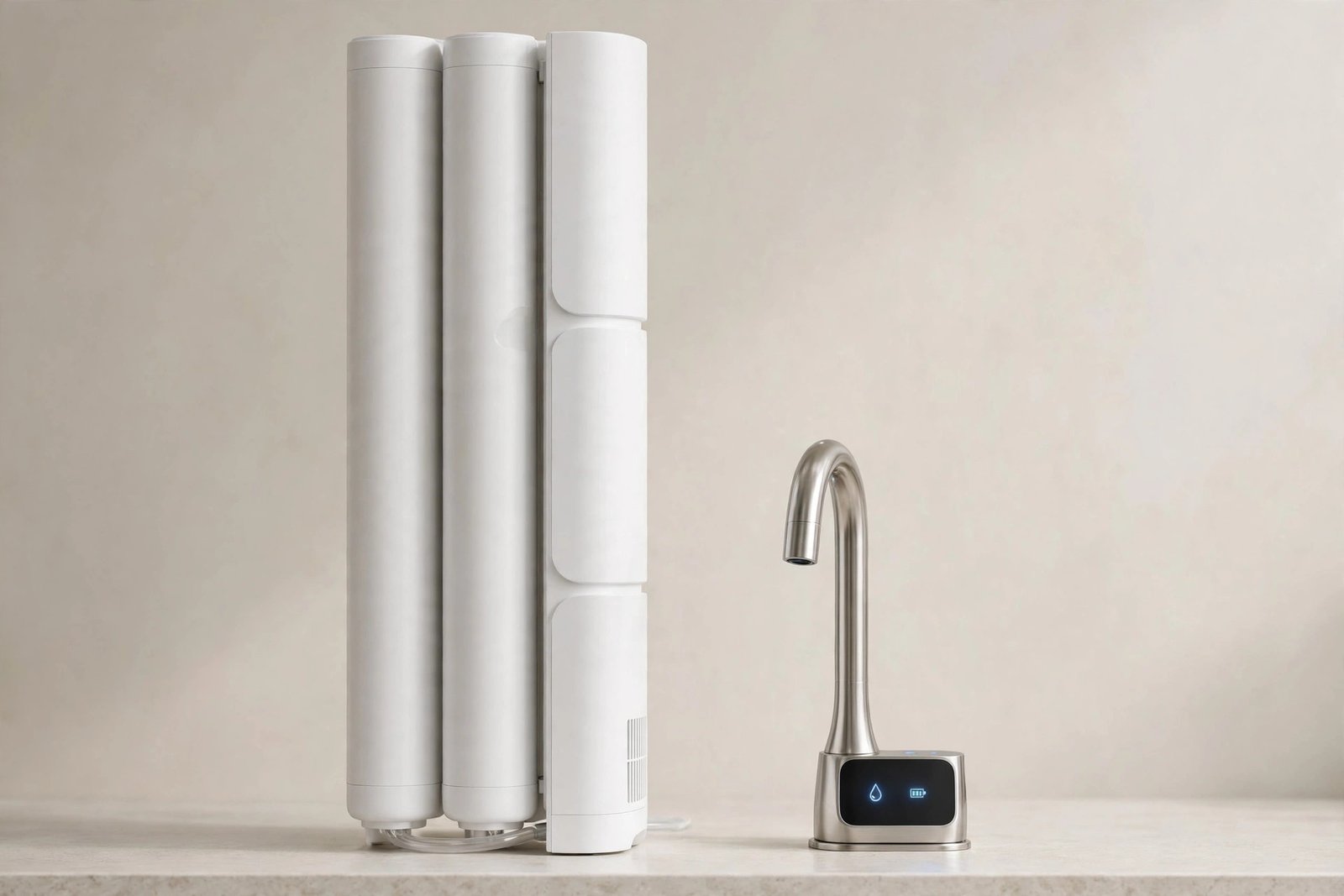
The smart faucet is the third reason I like the X12 for families. It shows TDS and filter life at the tap, so you stop guessing when a cartridge is done. Without a display, people change filters too early and waste money, or far too late and drink through a tired cartridge.

What the G3P800 does better
The G3P800’s case is simpler: it does the core job very well. You still get tankless flow, UV, and a smart faucet showing TDS. For a one- or two-person home, 800 GPD is not a compromise. It fills a glass in seconds and keeps up with normal cooking.
Its footprint is the other quiet win. The G3P800 is slimmer than the X12, and under a real sink every inch counts. If your cabinet already holds a disposal and years of cleaning bottles, a slimmer box can mean a tidy install instead of a wrestling match. Measure first, though: both units are tall, and height is what catches people out.
Taste is where the G3P800 is honest about what it is not. It adds no alkaline minerals in its standard setup, so the water can taste cleaner but flatter than the X12’s. Some people prefer that crisp, neutral taste. Do not buy it expecting the X12’s rounder taste and then feel let down.
If you are still weighing tankless options in general, my broader guide to the best tankless RO systems puts these two in context with the rest of the field, and my Waterdrop G3P600 vs G3P800 comparison is worth a read if you are wondering how much the UV step and the extra flow are really worth over the smaller G3 model.
Waterdrop X12: pros and cons
Pros
- Fastest flow in this pair at 1200 GPD, so big pots and back-to-back bottles are no drama.
- UV plus alkaline remineralization in one system, for people who want both steps covered.
- Rounder-tasting water than plain RO, thanks to the mineral stage.
- Smart faucet with TDS and filter-life readouts, so maintenance stops being guesswork.
- Tankless design frees up a good chunk of under-sink space compared with old tank systems.
Cons
- Bigger and taller than the G3P800, so tight cabinets need careful measuring.
- Needs an under-sink power outlet, like the G3P800, which rules out some older sink setups without an electrician visit.
- More stages and a smarter faucet mean more to understand at install time, even if day-to-day use is simple.
- Alkaline water reads a little higher on a TDS meter by design, which confuses people who expect a near-zero reading.
Waterdrop G3P800: pros and cons
Pros
- 800 GPD is genuinely fast for everyday homes, with no storage tank to babysit.
- UV LED sterilization included, which the smaller G3P600 does not have.
- Smart faucet shows TDS and filter life at a glance.
- Slimmer cabinet footprint than the X12.
- Simpler taste profile: clean, neutral RO water with no mineral stage to think about.
Cons
- No built-in alkaline stage, so water can taste flat if you love mineral water.
- Still needs an under-sink outlet and a spare faucet hole or a drilled hole.
- 800 GPD will feel like a step down if your house runs through water like a small cafe.
- Three cartridges on different schedules, so you need to track which one is due, even with the faucet reminders.
Filter costs: what to budget for, honestly
I am not going to quote you a neat yearly filter price here, because filter prices move, bundles change, and a single number would be out of date fast. What I can tell you, from how these systems are built, is the shape of the cost.
Both systems run on replaceable cartridges, not one big throwaway box. The pre-filters go first, the carbon stages sit in the middle of the schedule, and the RO membrane lasts the longest. That means your spending is lumpy: some years you swap a couple of cheaper cartridges, and the membrane year costs more. The faucet reminders help, but set a phone reminder too. I have seen too many good systems blamed for bad-tasting water when the real problem was a cartridge that should have been changed months earlier.
Budget like this: neither system’s filters are free or cheap. Treat upkeep as part of the purchase, check current cartridge prices on Amazon before you commit, and buy the system whose upkeep you will actually keep up with. A flagship with dead filters is worse than a simpler system with fresh ones.
For a deeper look at the X12 on its own, including its faucet and filter layout, see my Waterdrop X12 review for 2026.
Who should NOT buy either of these
Let me save some people money. Do not buy either system if you have no power outlet under your sink and no easy way to add one. Both need power. A beautiful tankless system that cannot be plugged in is just an expensive box.
Do not buy either one if you rent and your landlord will not allow a drilled faucet hole or a drain saddle. You need a place for the faucet and a drain connection, and that is not a renter-friendly afternoon project in every flat.
Do not buy the X12 if you hate the taste of mineral water or you want the lowest possible TDS reading on a meter. Its alkaline stage raises TDS on purpose. That is a feature, not a fault, but it is the wrong feature for you.
Do not buy the G3P800 if your household genuinely burns through water all day, every day. It will keep up, but the X12’s extra flow will make your life easier, and buying the smaller system twice, in spirit, by regretting it daily, is a bad deal.
And do not buy either system expecting it to fix well water problems alone. Both are built for municipal tap water. Well water needs pre-treatment advice from a water professional, and skipping that step can wreck a membrane fast.
A cheap tool that makes both systems better
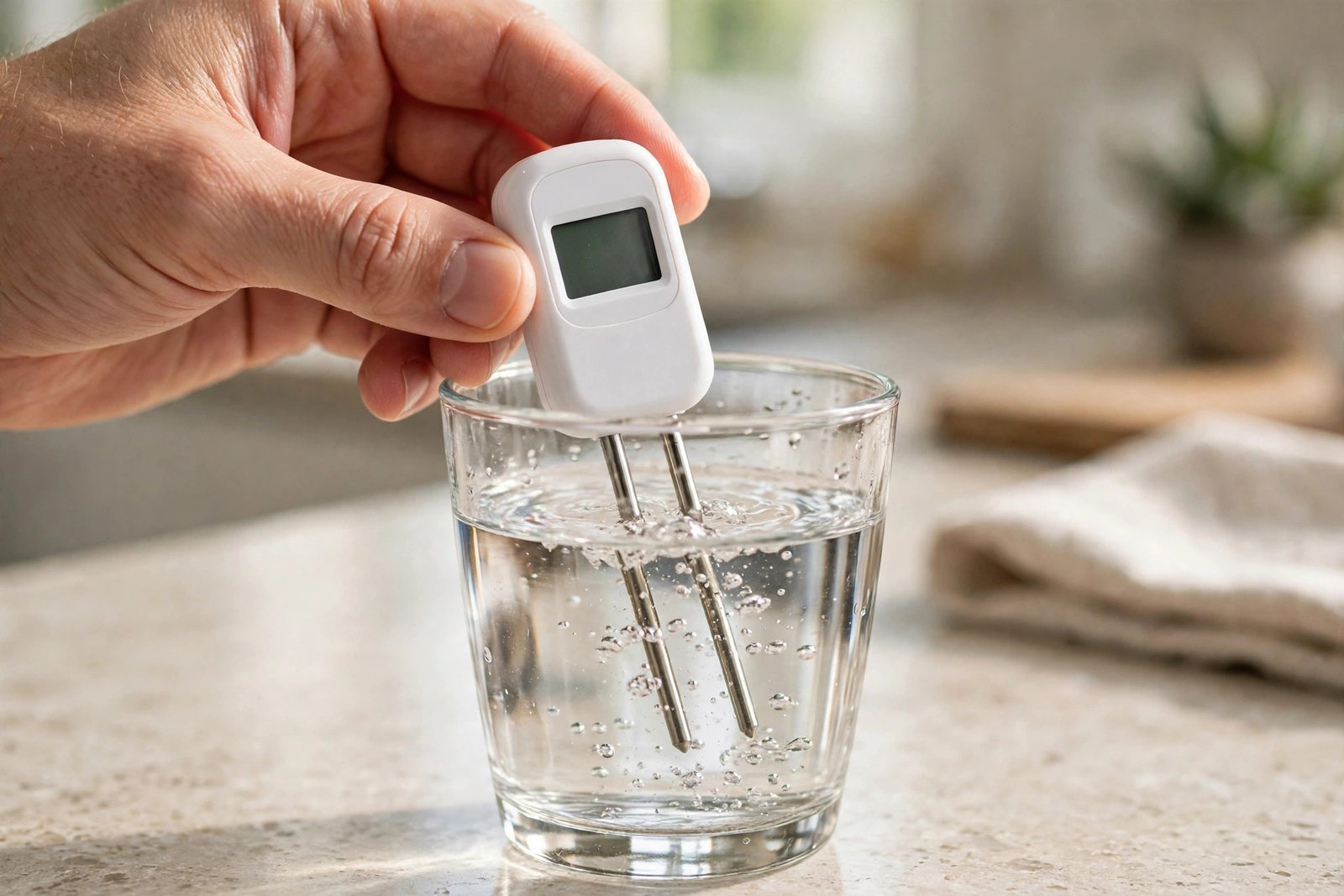
Both faucets show TDS, but a handheld meter is still worth owning. It checks any tap in the house without crawling under the sink.
The HM Digital TDS-EZ is the simple, low-cost option I point people to here. One clear limit: it measures total dissolved solids only. It does not say which contaminant is present, and a low reading is not proof a specific chemical is gone. Use it as a trend tool — a reading creeping up over months is your cue to check filters, not a lab report.
Verdict: which flagship should you pick?
My pick, for most buyers reading a flagship comparison, is the X12. The extra flow and the alkaline finish are the two things you feel every single day, and they are hard to add later. If you have the cabinet height, the outlet, and a household that actually drinks a lot of water, the X12 earns its place as the top pick in this pair.
Pick the G3P800 if your home is smaller, your cabinet is tight, and you like clean, neutral-tasting RO water without a mineral stage. You still get UV, you still get a smart faucet, and you still get fast tankless flow. That is a very good system, and I would not talk anyone out of it who fits that picture.
In one line for a friend: X12 for big households and mineral-water lovers, G3P800 for smaller homes that want a leaner flagship. Either way, measure your cabinet, confirm your outlet, and check current prices and cartridge costs before you order.
And if you are sorting out home gear at the same time, earnrove.com covers work-from-home setups and earning tools, while jobyroz.com covers jobs and online work guides. Clean water at the sink and a steady setup at the desk tend to go together in a real home.
Frequently asked questions
Which is faster, the X12 or the G3P800?
The X12: 1200 GPD against 800 GPD. Both fill a glass in seconds, but the gap shows up with big pots and busy mornings, where the X12 keeps pouring at full pace.
What is the UV and alkaline difference?
Both systems have UV. Only the X12 adds an alkaline remineralization stage in its standard setup. UV is a final sterilization step using light. Alkaline remineralization adds minerals back after the membrane, which changes taste and raises pH to around 7.5, per Waterdrop. The G3P800 does not claim a built-in alkaline stage, so its water stays in that clean, neutral RO style.
Do I need a power outlet under the sink?
Yes, for both. These are powered tankless systems, not passive filters. Check for an outlet before you order. If the only outlet is already taken by a disposal or dishwasher, plan how you will share it safely, and get an electrician involved if you are unsure. Do not run a system off a loose extension lead under a sink.
Will either system fit my cabinet?
Probably, but measure twice. The X12 is about 18.2 x 6.25 x 16.72 inches; the G3P800 is about 18.12 x 5.67 x 17.72 inches. Height and tubing bends catch people out, so leave room to swap cartridges without removing the whole unit.
How much do filters cost per year?
I have left dollar figures out on purpose, because cartridge prices change often. Expect lumpy spending: cheaper pre-filters more often, a membrane far less often, with the membrane year costing most. Add up the exact model’s cartridges over two years and judge by that total.