

Disclosure: This article contains affiliate links. If you buy through them, we may earn a commission at no extra cost to you. That never changes what we recommend, and the honest warnings in this article stay exactly as written.
The short answer: yes, but iron type and iron level decide everything
Yes, reverse osmosis removes iron — and it does it well, within limits. With a modest amount of dissolved iron and a well-maintained RO system, you can expect a big drop in iron at the tap. Published membrane data commonly cites dissolved-iron rejection of roughly 95% to 99% for systems that are looked after properly. That is a published range, not a result from a test we ran in a lab, and your real result depends on your feed water and filter age.
Here is the catch, and I want to be blunt about it because it is the part most sales pages skip: RO is a drinking-water filter, not an iron-removal plant. When iron levels climb high, or when iron bacteria or very hard well water enter the picture, iron starts clogging and coating the membrane. In that situation the honest move is to treat the iron first, then let RO polish the drinking water. I will walk you through how to tell which camp your water falls into, so you do not burn through membranes learning the hard way.
Ferrous vs ferric iron, in plain language
Iron shows up in home water in two main forms, and telling them apart matters more than almost anything else in this article.
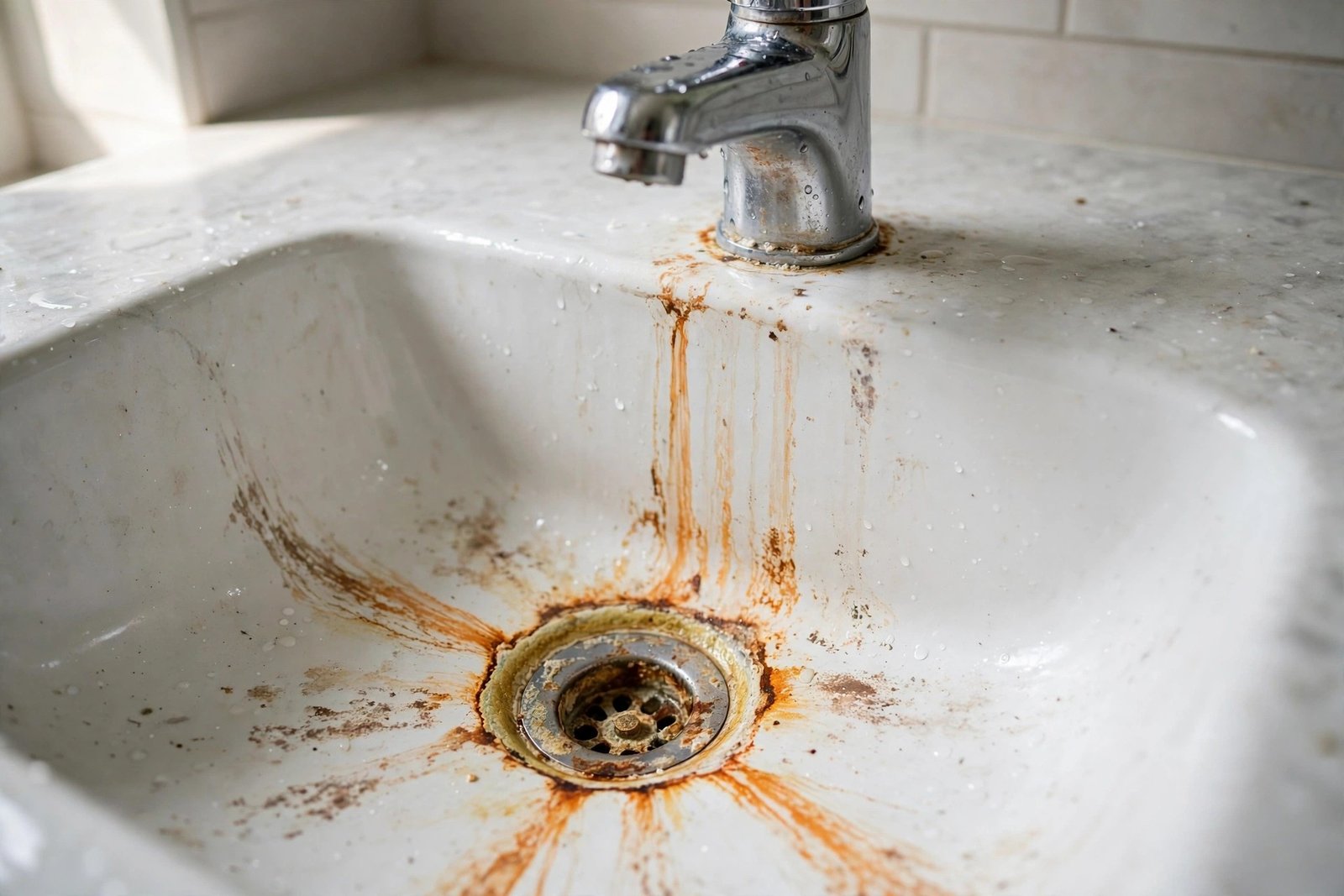
Ferrous iron is dissolved iron, often called clear-water iron. It is invisible when it comes out of the tap, then it oxidizes in air and leaves a rusty tint in a toilet tank or a yellow tinge in a white sink. Ferrous iron is the form RO handles best, because the membrane is built to reject dissolved minerals.
Ferric iron is already oxidized, particulate iron, often called red-water iron. You can see it: the water may look cloudy, yellow, or orange-brown straight from the tap. RO pre-filters catch some of this, but a steady load of particles clogs sediment filters fast and can coat the membrane, cutting flow.
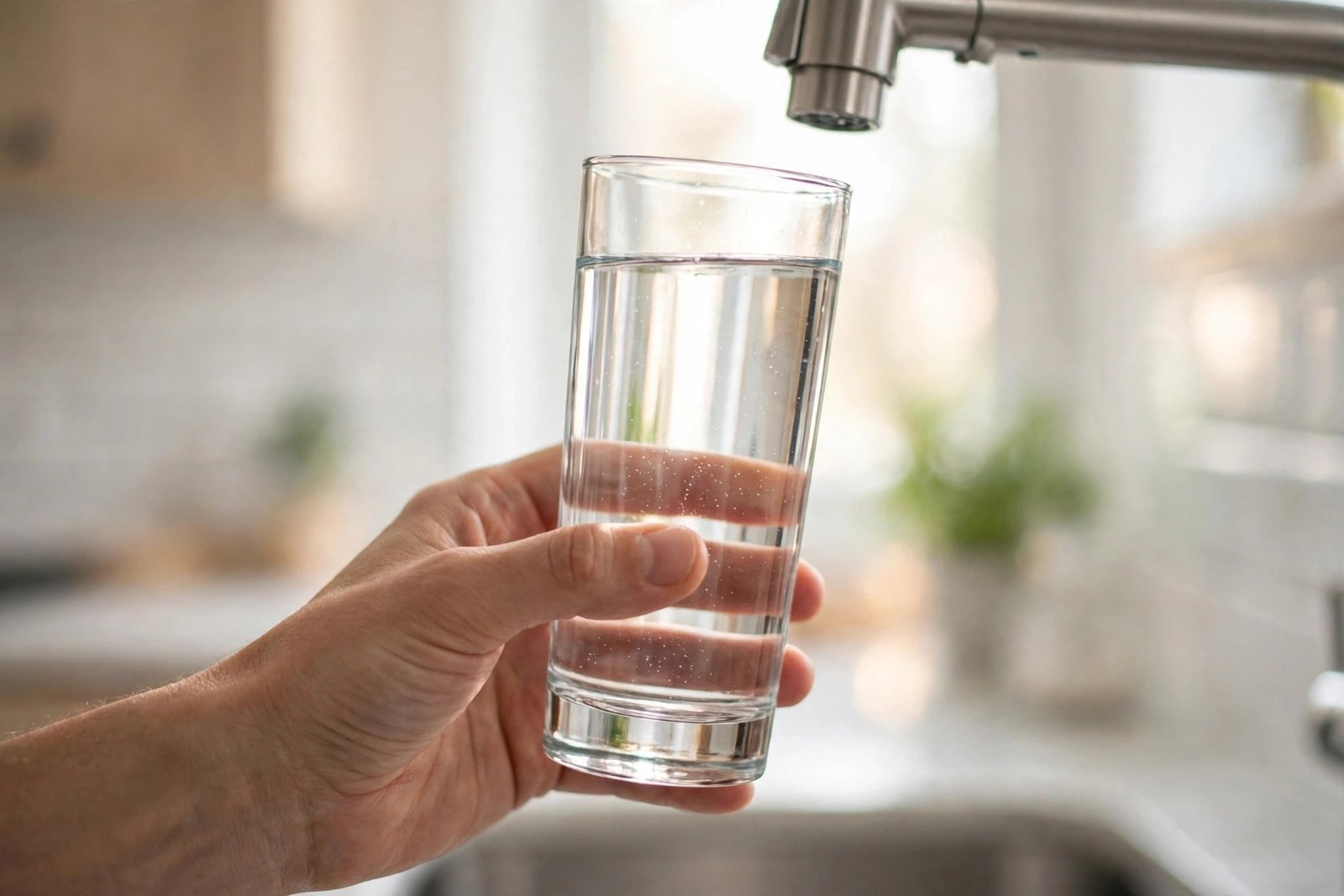
A quick home clue: fill a clear glass and check it after an hour or two. Water that starts clear and turns yellow points toward ferrous iron oxidizing in air. Water that looks rusty right away points toward ferric iron. This is a clue, not a lab result. If you are on well water, get a lab test before you buy anything major.
Why iron stains everything and tastes like a coin
Iron is a nightmare for laundry and fixtures long before it becomes a health conversation. It stains porcelain, sinks, and toilets orange-brown, turns white clothes dingy, and leaves rusty streaks in showers. It can give water a metallic taste that changes the flavor of coffee and tea.
One point that surprises people: iron does not have a federal health-based limit in the United States. The U.S. Environmental Protection Agency sets a secondary standard of 0.3 mg/L for iron, and that standard is about taste and staining, not a health limit. So when a product page implies iron in your water is a health emergency, take a breath. The real problems for most homes are taste, staining, laundry damage, and damage to plumbing and filters. If you have a specific health concern, talk to your doctor or your local health department rather than trusting a filter ad.
What RO actually removes, and where it struggles
An RO membrane works by pushing water through a semi-permeable membrane at the molecular level. Dissolved salts and minerals, including dissolved iron, are largely left behind and flushed away. For low-to-moderate dissolved iron in city or lightly affected well water, a standard point-of-use RO system is a sensible tool.
RO struggles in four situations, and each one deserves a plain warning:
1. High iron levels. Once iron climbs above a few parts per million, you are asking a small drinking-water membrane to do a whole-house job. Flow drops, the membrane fouls, and filters need changing far more often than the manual suggests.
2. Iron bacteria. Iron bacteria feed on iron and leave behind slimy, rust-colored deposits. They can clog pipes, stain fixtures, and foul a membrane in ways a filter change will not fix. If your water has a slimy feel, a swampy smell, or rust-colored slime in toilet tanks, suspect iron bacteria and get the water tested. RO does not fix a bacterial problem by itself, and iron bacteria need a treatment plan of their own.
3. Very hard well water alongside iron. Hardness minerals plus iron is a double load. Scale and iron deposits build up together, and the membrane ages faster, so pre-treatment often makes more sense before RO.
4. Heavy sediment and rust particles. Ferric iron, rust flakes, and sand chew through sediment filters. If you are changing a sediment filter every few weeks, your pre-treatment is not enough.
How to test your water before you buy anything
Testing first saves money. A cheap screen can point at the problem in ten minutes, while skipping testing and feeding heavy well water straight into a nice RO unit is how membranes choke. Do the cheap check, then do the serious one if you need it.
Start with a coarse screen: test strips. Multi-parameter strips that include iron can show you roughly if iron is present. Think of them as a yes-or-maybe screen, not a measurement you can plan a system around. They are coarse, the color matching is subjective, and they cannot measure low iron levels with precision. If you want a simple starting point, you can look up the JNW 15-in-1 strips on Amazon: Find It on Amazon. Honesty limit: we found only one public source for this product in our research, so treat it as a basic screening strip, not a proven lab-grade tool.
A TDS meter is useful, but it is not an iron test. This is a mistake I see constantly, so let me say it plainly: a TDS reading is NOT an iron measurement. A TDS meter measures total dissolved solids, the combined load of many minerals. It cannot tell you how much of that load is iron, and a low TDS reading does not prove your iron is gone. What it is good for is tracking your RO system over time: if your filtered-water TDS creeps up, something needs attention. Used as an iron test, it will mislead you.
For well water, get a lab test. A certified lab test measures iron properly, checks for iron bacteria and hardness, and gives you a number you can plan around. Many state programs and private labs offer well-water panels, and some local health departments can point you to one. If strips show iron, if you see staining, or if you are on a private well at all, a lab test is money well spent before you pick a system. For a deeper look at how TDS numbers work, see our guide to TDS levels explained.
Pre-treatment options when iron is too high for RO alone
If testing shows iron above a few parts per million, or if you have iron bacteria or heavy hardness, plan pre-treatment first. The right choice depends on your lab result, so treat this as a menu to discuss with your test in hand, not a prescription.
A dedicated iron filter is the most direct fix for heavy iron. It oxidizes and filters iron before it reaches your drinking-water tap, and it protects everything downstream, including an RO unit.
A water softener can help with low-to-moderate ferrous iron alongside hardness, because ion-exchange softeners remove some dissolved iron as they soften. They are not a cure for heavy iron or iron bacteria on their own, but in the right water they take a real load off the RO membrane.
Sediment filtration matters when ferric iron and rust particles are the problem. A good sediment stage keeps particles from reaching the membrane, and on a well, a whole-house sediment filter is often the cheapest protection you can add.
Iron bacteria treatment is a separate job. It can involve shock chlorination of the well and ongoing treatment, and it is worth getting a water professional involved rather than guessing. Do not try to filter your way out of a bacterial problem with an RO unit alone.
See also our guide to the best RO system for well water for the well-specific checks.
Maintenance when your feed water carries iron
Iron-bearing water is harder on filters than clean city water, so the manual schedule is a starting point, not a promise. Watch for slower flow, a return of metallic taste, or a filtered-water TDS reading that keeps climbing. Any of those means check your pre-filters first. Do not keep running a fouled membrane hoping it recovers.
Change sediment and carbon pre-filters on time, or early if your water is visibly rusty. Keep the system sanitized on the schedule your manual gives. If you have a softener or iron filter upstream, keep that maintained too, because a neglected pre-treatment stage passes its problem straight to the membrane. I also keep a simple habit that helps: note the date of each filter change on the filter housing with a marker. When flow drops months later, you will know exactly how old everything is instead of guessing.
One honest note: an RO unit at the kitchen sink treats drinking water at one tap. It does not fix stained laundry, orange showers, or rusty toilets. If those whole-house symptoms are your main complaint, whole-house iron treatment is the fix, with RO as a bonus for drinking water. Our best tankless RO guide covers the drinking-water side of that setup.
Frequently asked questions
Will RO fix my orange stains?
RO at the kitchen tap improves the water you drink and cook with, but it will not fix stains in showers, toilets, or laundry, because those fixtures do not run through it. For stains across the house, you need whole-house iron treatment.
Does RO remove iron bacteria?
No, not reliably. Iron bacteria create slime and deposits that foul membranes, and they need their own treatment plan, often starting with the well itself. Get a lab test and talk to a water professional first.
Can I run well water straight into an RO system?
You can if the well water is low in iron, hardness, and sediment, and you keep up with filter changes. You should not if iron is high, if iron bacteria are present, or if sediment is heavy. Pre-treatment first is the honest recommendation there.
Does a water softener remove iron?
A softener can remove some dissolved ferrous iron at low-to-moderate levels alongside hardness, but it is not a dedicated iron filter. Heavy iron fouls softener resin, and ferric iron and iron bacteria are outside what a softener handles well.
What to buy first: test kit, then the right system
Start with testing, in this order. First, a coarse iron screen with strips gives you a quick first look. Then, a TDS meter helps you track your RO system over time — and remember, a TDS reading is NOT an iron measurement, so pair it with strips and, for well water, a lab test.
HM Digital TDS-EZ — for tracking your RO system, not for measuring iron. This simple handheld meter compares your tap water and filtered water over time, and flags when filters or the membrane need attention. It will not tell you your iron level. I would rather you know that limit before you buy than after.

Check Price on Amazon — HM Digital TDS-EZ
Once testing shows your iron is low to moderate and suited to a drinking-water RO unit, a tankless system is a clean kitchen fit, because it saves under-sink space and avoids a storage tank. The system below is our pick for that low-to-moderate use only, not for high-iron well water. If your lab result shows high iron, iron bacteria, or heavy hardness, get a dedicated iron pre-filter or softener in place first.
Waterdrop G3P600 — for low-to-moderate iron drinking-water use, with pre-treatment first if iron is high. This tankless unit sits under the sink and produces filtered drinking water on demand, without a tank taking up cabinet space. Keep the filters on schedule, and feed it heavy raw well water with no pre-filter and you will shorten its life — that warning is part of the recommendation, not fine print.

Check Price on Amazon — Waterdrop G3P600
Bottom line: RO removes dissolved iron well at drinking-water levels, published figures put that rejection in the mid-to-high 90s for a maintained system, and the EPA secondary standard of 0.3 mg/L is a taste and staining guide, not a health limit. Test first, treat heavy iron upstream, and let RO do what it does best — clean, good-tasting water at your kitchen tap. Our friends at JobyRoz and Earnrove cover home and money topics that pair well with a well-water budget.