

As an Amazon Associate I earn from qualifying purchases.
Well water is harder on an RO system than city water — by a lot. City water arrives pre-treated, pressurized, and predictable. Well water arrives raw: iron, sediment, hardness, bacteria, and pressure swings that can kill an ordinary under-sink system in months.
Ask around the well-owner forums and you’ll hear the same story: someone installs a basic RO, the filters clog in weeks, the membrane dies within the year, and the water tastes metallic again. The system wasn’t defective. It was the wrong system for that water.
The Well-Water Decision Tree
Run this before looking at any product — one afternoon and a cheap test kit can save you from buying a system your water will destroy.
Comparison Table: 4 RO Systems for Well Water
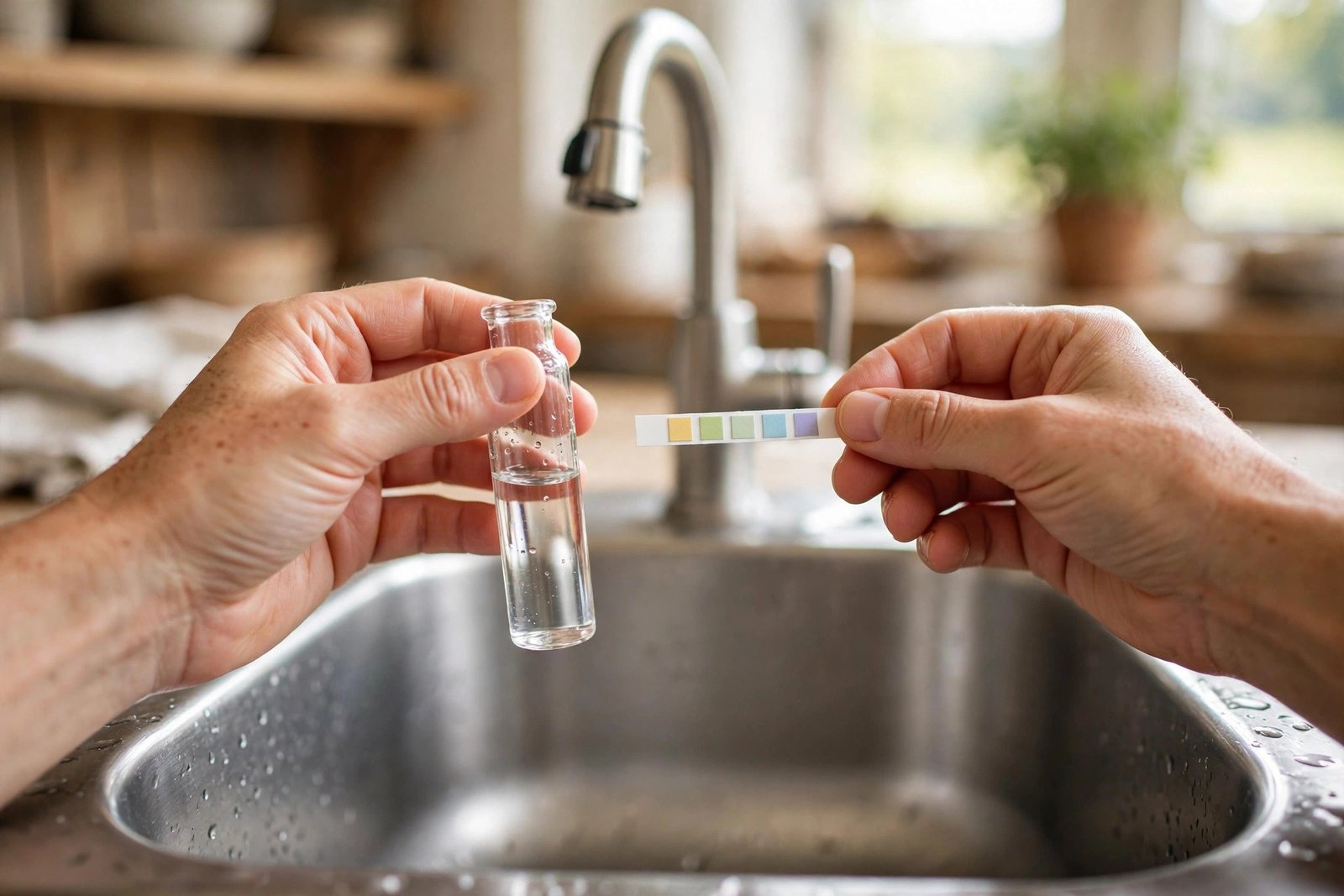 1. Test your water. Get a home test kit or send a sample to a certified lab: iron, hardness (TDS), pH, bacteria, nitrates. One well owner watched iron clog a brand-new RO in under 1,000 gallons — a $20 test would have flagged it.2. Iron or sediment? Orange-brown sink stains, metallic taste — that’s iron above the ~0.3 mg/L level where it fouls membranes. You’ll need an iron pre-filter (or a dedicated iron filter for heavy levels) before the RO.3. Bacteria? Private wells aren’t chlorinated, so coliforms are possible — especially after flooding or septic work. A UV-equipped RO protects drinking water; it doesn’t fix a contaminated well.4. Inlet pressure? RO membranes need roughly 40 PSI or more, and many well pumps cycle at 30–50 PSI. Below ~40 PSI, get a booster pump or permeate pump — otherwise you get slow fill, heavy waste, and early membrane fouling.
| System | iSpring RCC7P-AK | Home Master TMHP | APEC RO-PERM | Express Water RO5DX |
|---|---|---|---|---|
| Amazon ASIN | B005LKKMYS | B00N2941N8 | B00HSV2WZA | B00J2DGTD8 |
| Stages | 6 (RO + alkaline) | 9 (iron pre-filter + UV) | 5 | 5 |
| Output | 75 GPD | 75 GPD | 90 GPD | 50 GPD |
| Pump | Electric booster pump (below ~40 PSI) | Non-electric permeate pump | Non-electric permeate pump | None |
| Waste ratio | Up to 1.5:1 pure-to-drain | ~1:1 (up to 80% less waste) | Up to 80% less waste | 1–3 gal wasted per gal made |
| Well extras | Alkaline stage restores taste | KDF85 iron pre-filter, UV chamber | Built for 30–50 PSI wells | NSF/ANSI 42, 58, 372, 401 |
| Review band | ~4.7 stars / ~1,600+ reviews | ~4.7 stars / ~900 reviews | ~4.2 stars / ~200–300 reviews | ~4.5–4.6 stars / 5.7k–8.8k reviews |
| Warranty | 1-yr limited (on registration) | 5-yr limited parts | Check listing | Check listing |
Review bands are rounded Amazon snapshots that shift over time; prices move with promos, so check live listings. The APEC RO-PERM has been seen around $370–$391 on Amazon vs. a $369.95 manufacturer price.

1. iSpring RCC7P-AK — Best All-Rounder for Low-Pressure Wells
The RCC7P-AK is iSpring’s pump-equipped, alkaline version of the classic RCC7 platform — and for well owners, that booster pump is the whole story.
It kicks in when inlet pressure sags below about 40 PSI. The 6th alkaline stage adds minerals back, smoothing out the flat taste RO can leave.
On paper: 6 stages, 75 gallons per day, up to 1.5:1 pure-to-drain with the included tank, 1-year limited warranty on registration. Note the exact model name — RCC7P-AK, not the plain 5-stage RCC7. Different systems.
Pros
- Built-in booster pump fixes the most common well problem: low pressure
- Alkaline remineralization improves taste without re-contaminating the water
- ~1,600+ reviews in the ~4.7 star band — years of answered questions and easy parts availability
Cons
- Pump needs an electrical outlet under the sink (see the non-electric APEC below)
- No dedicated iron pre-filter or UV — heavy iron or bacteria still needs pre-treatment
- Third-party spec blogs contradict each other on the max TDS rating, so check iSpring’s own product page for the current number
Who it’s for: low-pressure wells with decent water quality — low iron, clean bacteria test.
Check the live price for the iSpring RCC7P-AK on Amazon →
2. Home Master TMHP HydroPerfection — Best for Iron, Bacteria and Hard Water
If your well test came back ugly — iron, hardness, bacteria — the TMHP is built for exactly that. Nine stages: sediment filter, KDF85 iron pre-filter, catalytic carbon, the RO membrane, a UV sterilizer chamber (listed as destroying up to 99.9% of microorganisms), two-pass remineralization, and a post-filter.
Other details: non-electric permeate pump (no outlet needed, ~1:1 waste ratio), 40–100 PSI range, up to 1 GPM flow, and a 5-year parts warranty — the longest in this roundup.
Pros
- Only pick here with an iron pre-filter AND UV in one box — the two things well water most often needs
- Non-electric permeate pump: no outlet, better efficiency, less drain water
- ~4.7 star band on ~900 reviews; owner feedback skews well-water positive
Cons
- Amazon item data lists max feed TDS around 600 ppm — very high-TDS wells need pre-treatment or a different system
Who it’s for: wells with iron, manganese, or bacteria concerns — pre-treat extreme iron separately.
Check the live price for the Home Master TMHP on Amazon →
3. APEC RO-PERM — Best Non-Electric Pick for Low-Pressure Wells
The RO-PERM is the quiet specialist: a 5-stage system with a non-electric permeate pump, designed for 30–50 PSI inlet pressure — the textbook well-pump band. APEC claims the pump fills the tank 2–3x faster and wastes up to 80% less water than a passive system. Highest output here (90 GPD), ships with faucet and 4-gallon tank.
Pros
- Non-electric pump: ideal with no outlet or no desire for a powered pump under the sink
- Highest daily output (90 GPD) and fast tank refill
- Established brand with real customer support; made in USA filters
Cons
- Smallest owner base (~4.2 stars, a few hundred reviews) — less community troubleshooting to lean on
- No iron pre-filter or UV; same pre-treatment caveats as the iSpring
- Flag: a non-US marketplace once paired this model with a different ASIN. The correct US listing is B00HSV2WZA — confirm at checkout.
Who it’s for: 30–50 PSI wells that want pump efficiency with zero electricity.
Check the live price for the APEC RO-PERM on Amazon →
4. Express Water RO5DX — Best Budget Pick (One Honest Caveat)
The RO5DX is the value play: 5-stage, 50 GPD, with genuine third-party certifications (NSF/ANSI 42, 58, 372, 401 plus EPA 524.2 lab testing) — rare at this price level. Huge owner base (~4.5–4.6 stars across 5.7k–8.8k reviews), and it ships with an extra filter set plus a leak-stop detector.
The honest caveat, and it’s a big one for wells: it has no pump. Express Water’s own guidance says a booster pump may be needed below 40 PSI — and plenty of wells sit below 40 PSI at the kitchen tap. The product text lists well water as a use case, but on a low-pressure well plan on adding a booster pump, or expect slow production and heavy waste (1–3 gallons per gallon made).
Pros
- Real NSF certifications at a budget price
- Thousands of owners — any install question already has an answer
- Extra filter set and leak detector in the box
Cons
- No pump — needs confirmed adequate pressure; marginal wells will underperform without one added
- 50 GPD is the lowest output here; big families will feel it
- No iron or UV handling — pre-treatment is on you
Who it’s for: confirmed 40+ PSI and clean test results, on a tight budget. Marginal pressure? Add a booster pump or pick a pump system.
Check the live price for the Express Water RO5DX on Amazon →
The Pre-Treatment Honesty Box
No under-sink RO is a whole-house treatment plant. On well water, what goes into the system decides how long it lives:
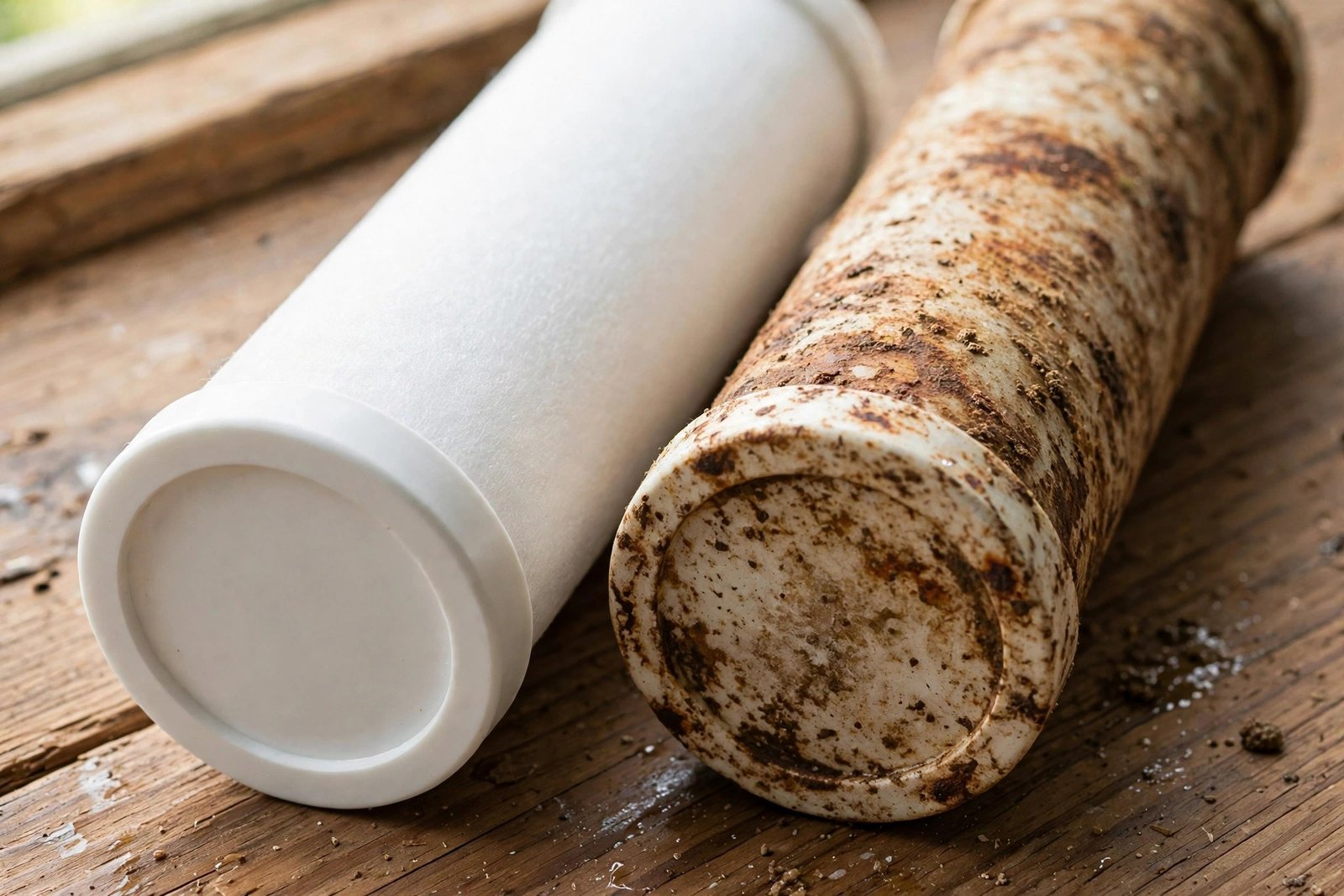
- Sediment: if your well kicks up sand or silt, a cheap 5-micron sediment pre-filter ahead of the RO is the best money you’ll spend. Check it monthly at first.
- Iron: dissolved iron above ~0.3 mg/L coats the membrane and kills it — sometimes in under 1,000 gallons. The TMHP’s KDF85 stage handles moderate iron; heavy iron wants a dedicated whole-house iron filter first.
- Hardness: very hard water scales the membrane. A softener before the RO protects it — softener first, RO second, always. We compare the two in our RO vs water softener guide.
- Bacteria: UV after the membrane handles drinking-water bacteria. But UV doesn’t fix a contaminated well — if your lab shows coliforms, get the well treated, then protect the tap.
- Sulfur smell: RO helps with taste but won’t fully remove strong hydrogen sulfide; a dedicated sulfur filter is the fix.
Rule of thumb: brown pre-filters every few months means your pre-treatment is working and the membrane is safe. Membranes that keep dying mean the pre-treatment isn’t.
Filter Cost Per Year: The Part Nobody Mentions
An RO system is a small subscription, not a one-time purchase. Pre-filters last roughly 6–12 months, membranes 2–3 years — shorter on well water. A year’s replacement filters for a typical 5- or 6-stage system generally runs well under a hundred dollars.
For perspective, a family drinking two gallons a day from jugs spends over $500 a year on bottled water. The RO pays for itself; the filter budget is the part people forget to plan.

Who Should NOT Buy an RO for Well Water
- Bacteria with no disinfection plan. An RO membrane alone is not a bacteria guarantee — every manufacturer says so in the fine print. Test first; disinfect properly.
- Extreme iron and no pre-treatment. You’ll burn through membranes every few months and blame the system. Fix the iron first.
- You need whole-house water. An under-sink RO makes a few gallons a day for drinking and cooking. It won’t protect your water heater or laundry from hard, iron-rich water — that’s softener territory.
- The well itself is failing. Low, sputtering pressure makes even a pump system miserable. Fix the supply first.
- You won’t change filters. An RO with neglected filters is worse than none — it gives you confidence in water that isn’t being cleaned.
The Bottom Line
Match the system to your test results, in this order: test, pre-treat, then pick. Low pressure but clean water? The iSpring RCC7P-AK and its booster pump is the straightforward answer. Iron, bacteria, or ugly results? The Home Master TMHP brings the iron pre-filter and UV in one box. Pump efficiency with zero electricity? The APEC RO-PERM fits the 30–50 PSI band. Clean test, good pressure, tight budget? The Express Water RO5DX — with the no-pump caveat understood.
Do it in that order and an RO on well water runs for years. Skip the test and you’ll be buying a second system — or a lot of bottled water — sooner than you think.
Want to go deeper? Compare the two biggest names in our iSpring vs APEC guide, see the compact alternatives in our best tankless RO roundup, or check what RO does and doesn’t remove in our PFAS and RO guide.
FAQ
Do I need pre-filters before an RO system on well water?
Usually, yes. Well water carries sediment — and often iron or hardness — that clogs standard pre-filters fast and shortens membrane life. A dedicated sediment pre-filter, and an iron filter for heavy iron, ahead of the RO is standard practice.
Will high iron in well water destroy my RO membrane?
It can — documented cases show iron fouling an RO in under 1,000 gallons. Above roughly 0.3 mg/L, plan on iron pre-treatment: a KDF85-equipped system like the Home Master TMHP handles moderate levels; a dedicated iron filter handles heavy ones.
Do I need a booster pump for an RO system on well water?
If your inlet pressure is below about 40 PSI, yes — or pick a system with a non-electric permeate pump. Many wells sit in the 30–50 PSI band, which is exactly why pump-equipped models like the iSpring RCC7P-AK and APEC RO-PERM exist.
Will an RO system filter out E. coli or bacteria from well water?
RO membranes reject microorganisms, but standard under-sink systems aren’t certified for bacteria removal. The safe setup is a UV sterilizer (built into the Home Master TMHP, or a separate unit) plus a lab-tested supply. If your test shows coliforms, treat the well itself.
Does an RO system remove chromium-6?
Reverse osmosis is one of the most effective home methods for reducing chromium-6, along with lead, arsenic, and fluoride. For exact reduction claims, check the specific model’s spec sheet or certification listing.
Should I install an iron filter before the RO system?
Above ~0.3 mg/L iron, yes. Moderate iron is handled by a built-in iron stage (like the TMHP’s KDF85 pre-filter); heavy iron wants a dedicated whole-house iron filter. Pre-treating iron is cheaper than replacing membranes.
Do I need a water softener before RO on well water?
Not always — but very hard water scales the membrane, and a softener ahead of the RO extends membrane and filter life. The order is always softener first, RO second.