

Affiliate disclosure: This article contains affiliate links. If you buy through one, we may earn a small commission at no extra cost to you. It helps keep Clearove running, and it never changes what we recommend.
So, iSpring RO500 or Frizzlife PD600? Short answer: buy the iSpring RO500 if certification paperwork and a premium feel matter most, and buy the Frizzlife PD600-TAM3 if you want more daily output, an alkaline stage in the box, and a lower upfront spend. Both are tankless RO systems at a 2:1 drain ratio, and both give clean, great-tasting tap water. The real differences sit in certification, flow, alkaline design, and filter costs over the years.
Neither is a bad buy; one just fits some kitchens and budgets better. Here is where each wins, where each falls short, and which I would pick for different buyers.
At a glance: the two systems side by side
First, the hard specs. Anything the manufacturer or Amazon listing does not clearly state, I marked “not stated” rather than guessing. I would rather leave a blank than hand you a fake fact.
| Spec | iSpring RO500 (plain BN model) | Frizzlife PD600-TAM3 |
|---|---|---|
| Design | Tankless under-sink RO | Tankless under-sink RO |
| Daily output | 500 GPD | 600 GPD |
| Flow rate | ~0.4 GPM | not stated |
| Drain ratio | 2:1 | 2:1 (official) |
| Certification | NSF/ANSI 58 system certification per iSpring/manuals | not stated |
| Alkaline stage | None on the plain BN model; the separate AK variant adds alkaline remineralization | Yes, via TAM3 external alkaline housing |
| Power and cabinet fit | not stated | not stated |
| Filter life and replacement prices | not stated here; check the listing and manual | not stated here; check the listing and manual |
That table tells most of the story: Frizzlife makes more water, iSpring holds the certification badge, both sit at 2:1 drain, and alkaline is standard on the Frizzlife TAM3 but a separate iSpring variant.

What 500 vs 600 GPD actually means in a real kitchen
GPD means gallons per day, and it is a maximum rating, not a promise about how fast your glass fills. On paper 600 GPD beats 500 GPD, and busy households will notice the extra headroom.
But for a one- or two-person household filling glasses and a coffee pot, 500 GPD is already plenty. The RO500’s stated flow of around 0.4 gallons per minute shapes daily life more than the GPD headline, since it governs how long one glass takes to fill. Frizzlife states no flow figure in the specs I am working from, so I will not invent one. If fill speed matters most, check the current PD600 listing and manual first.
My take: the Frizzlife wins on raw output, but modestly. It is a tiebreaker for big households, not a reason for a small household to switch sides.
The drain ratio question, answered honestly
Both systems run at a 2:1 drain ratio: for every glass of purified water, roughly two glasses go to the drain. That beats the old 4:1 or 5:1 systems, but it is not zero-waste water. If you are on a metered supply, know that before you buy either one.
Honesty note: older Frizzlife marketing described the PD600 at 1.5:1; the current official figure is 2:1, used throughout. If you spot an old listing still quoting 1.5:1, treat it as outdated. Since both sit at 2:1, do not let drain ratio decide this matchup. Decide it on certification, alkaline design, and price.
Certification: the iSpring’s strongest card
This is where the RO500 pulls clearly ahead, and for some buyers it ends the debate. It carries NSF/ANSI 58 system certification according to iSpring and its manuals. NSF/ANSI 58 covers reverse osmosis systems, and a system-level certification means an independent body checked the whole system, not just one component.
The Frizzlife PD600 carries no comparable system certification claim in the specs I am working from, so I marked it “not stated.” That does not mean it makes bad water. It means you cannot point to the same independent certification badge.
How much should you care? If you are buying for a home with a baby, an elderly relative, or someone with health worries, I think the certification is worth real money. It is documented reassurance, and reassurance is half of what you buy with a water filter. Do not let any article tell you both systems are “equally certified” when only one carries the claim.
Alkaline water: built-in variant versus add-on housing
This is where shoppers get tripped up, so let me spell it out. The plain iSpring RO500 linked here, the BN model, does NOT add alkaline minerals back into your water. Reverse osmosis strips almost everything out, minerals included, so the plain RO500 gives you very pure, slightly flat-tasting water. If you want alkaline remineralization from iSpring, you need the separate AK variant, a different model with its own listing. Do not buy the plain BN model expecting alkaline water.
The Frizzlife PD600-TAM3 takes the opposite approach. TAM3 is an external alkaline housing that comes with this version, so remineralization is part of the package. It sits outside the main unit, which makes it easy to understand and service.
Do you actually need alkaline water? Honestly, most people do not. Plenty of RO owners drink plain purified water for years and love it. I would buy alkaline for taste, not for miracle promises, since health claims around it run far ahead of the evidence. If alkaline taste matters to you, the Frizzlife TAM3 wins on simplicity. If not, this section is a tie.

iSpring RO500: pros and cons
Pros
- NSF/ANSI 58 system certification per iSpring/manuals, the strongest documented reassurance in this matchup.
- Stated flow of around 0.4 GPM, so you know what to expect at the tap.
- Premium feel from a brand with a long RO track record.
- Tankless design frees up under-sink space compared with old tank systems.
- Clear variant labeling: plain BN for pure RO, AK variant if you want alkaline.
Cons
- Lower daily output at 500 GPD than the Frizzlife’s 600 GPD.
- Alkaline remineralization is not included on the plain BN model.
- Premium positioning usually means a higher upfront price than the budget pick.
- Filter prices and lifespans not stated here; check the listing for running costs.
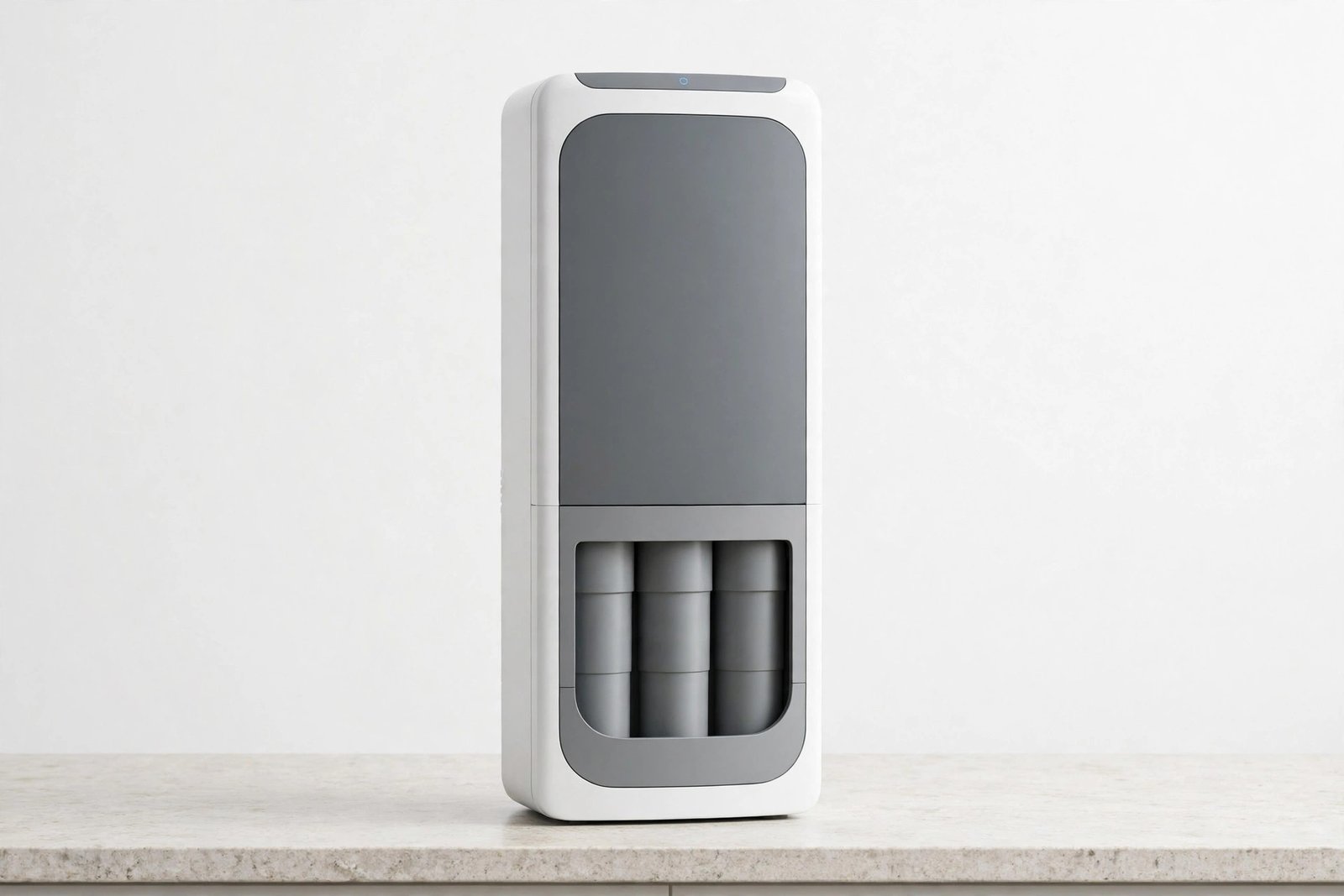
Check the iSpring RO500 on Amazon
Plain BN model linked. The AK variant is a separate model with alkaline remineralization; check the variant name on the listing before you order.
Frizzlife PD600-TAM3: pros and cons
Pros
- Higher daily output at 600 GPD, a genuine plus for busy households.
- Alkaline stage included through the TAM3 external housing, no variant hunt required.
- Budget-friendly positioning gives you more output per dollar upfront.
- Tankless design saves under-sink space.
- Same 2:1 drain ratio as the premium pick, so you lose nothing on water efficiency.
Cons
- No NSF/ANSI 58 system certification claim stated in the specs used here.
- Flow rate not stated, so fill speed is harder to compare against the RO500’s 0.4 GPM.
- Older marketing quoted 1.5:1 drain, which can confuse shoppers; the current official figure is 2:1.
- The external TAM3 housing needs a little extra under-sink room.

Check the Frizzlife PD600-TAM3 on Amazon
TAM3 version linked. Make sure the listing shows TAM3 in the model name so the external alkaline housing is included.
Filter costs per year: what you should actually budget for
Here is where I refuse to give you a fake number. I have not verified current replacement filter prices for either system, and prices move with sellers, bundles, and sales. Any article printing an exact yearly cost without a source is guessing.
Both systems need regular cartridge replacements, and cartridges are not interchangeable between brands, so you buy into a filter ecosystem, not just a box. Budget a recurring yearly filter spend as part of the real price. Before ordering, find the replacement set for your exact model and note its price and change interval.
Qualitatively, the Frizzlife usually wins on upfront price, and running costs for both sit in the same everyday range as other tankless systems. Over five years, the gap is more likely to come from the purchase price than from a dramatic filter-cost difference, but verify the cartridge price yourself, because that is the one number that can surprise you.
Who should NOT buy each system
Do not buy the iSpring RO500 plain BN model if you want alkaline water and you are about to order the BN link without reading the variant name. You will get pure RO water, not remineralized water. Also skip it if your household burns through huge volumes daily and the extra 100 GPD genuinely matters, or if the premium price stretches your budget for no reason you can name.
Do not buy the Frizzlife PD600-TAM3 if a documented system certification is a must-have. If you need an NSF/ANSI 58 system certification, the iSpring is the honest pick, because the Frizzlife does not state one. Also skip it if your cabinet is cramped and the extra TAM3 housing is a problem, or if you need a stated flow rate in writing first.
Do not buy either system if your tap water has a known contamination problem that needs a lab test first. A TDS meter tells you total dissolved solids, not which contaminants are present, and neither system replaces proper water testing. And if you are renting, do not buy either until your landlord allows under-sink plumbing changes in writing.
A cheap tool that makes either system better
A simple TDS meter will not tell you everything about your water. It measures total dissolved solids as one number. It cannot tell lead from calcium, or detect individual contaminants by name. What it can do well is show a before-and-after reading confirming your RO system is doing its job. A reading creeping up over months is an early nudge that filters need attention.
The HM Digital TDS-EZ is the low-cost meter I point people to for exactly that job. It is simple, pocket-sized, and cheap enough that there is no excuse not to own one if you run an RO system.

Check the HM Digital TDS-EZ on Amazon
TDS-only meter: it measures total dissolved solids, not individual contaminants. Use it to track filter performance, not to diagnose water safety.
Verdict: which one should you buy?
Pick the iSpring RO500 if certification matters to you, if you like knowing your flow rate in writing, and if you will pay a premium for polish and documented reassurance. It earns the premium label honestly.
Pick the Frizzlife PD600-TAM3 if you want more daily output, alkaline water without a variant hunt, and a lower upfront price. You give up the certification badge and a stated flow figure, and for a lot of households that trade is well worth it.
My personal lean? For a busy family kitchen, I lean Frizzlife: the extra output and included alkaline stage are things you feel every day, while a certification badge is something you feel once, when you buy. Where reassurance is the whole point, I lean iSpring. The wrong choice is buying the plain BN iSpring expecting alkaline water, or the Frizzlife expecting a certification it does not claim.
Want the deeper dive? Read our full iSpring RO500 review and Frizzlife PD600 review, or our best tankless RO guide. Our sister sites JobyRoz and Earnrove cover jobs and online income in the same plain-English style.
Frequently asked questions
Is the iSpring RO500 or the Frizzlife PD600 better value?
It depends what you count as value. The Frizzlife gives more gallons per day and an alkaline stage for a lower upfront price, so on output per dollar it wins. The iSpring gives NSF/ANSI 58 system certification and a stated flow rate, so on reassurance per dollar it wins. Frizzlife is the budget-value winner; iSpring is the premium-value winner.
What is the certification difference between them?
The iSpring RO500 carries NSF/ANSI 58 system certification per iSpring and its manuals. The Frizzlife PD600 does not state a comparable system certification in the specs used here. That gap does not prove the Frizzlife filters poorly, but only one of the two lets you point to an independent system-level certification.
How does alkaline water work on each system?
Alkaline remineralization is not part of the plain iSpring BN model; you need the separate AK variant. The Frizzlife TAM3 version includes an external alkaline housing, so remineralization comes in the box. Check the exact variant name in both cases, because the letters after the model number decide what you actually get.
Do these systems need power, and will they fit under my sink?
Power and cabinet dimensions are not stated in the specs used here, so I will not guess at them. Both are tankless under-sink units, but the Frizzlife TAM3 adds an external housing needing a little extra room. Check the listing and manual, and measure your cabinet first.
How much will filters cost each year?
I have not verified current filter prices, so I am not printing a yearly figure. Both systems need periodic cartridge replacements from their own brand, and that recurring spend is part of the true cost. Check the cartridge price and change interval for your exact model, then work out the yearly total yourself.