
As an Amazon Associate I earn from qualifying purchases.
Reverse osmosis water has one annoying side effect: it tastes a little flat. RO membranes are so good at their job that they strip out the minerals along with the contaminants, leaving water that’s slightly acidic and, frankly, a bit boring to drink.
That’s exactly the problem the iSpring RCC7AK and the APEC ROES-PH75 were built to solve. Both are classic 6-stage under-sink RO systems. Both carry legitimate third-party certifications. And both add a final alkaline remineralization stage that puts a little mineral content — and a better taste — back into your water.
So which one deserves the space under your sink? They’re priced in the same band, they do the same job, and owners of both are fiercely loyal. Here’s the honest, stage-by-stage comparison.
Quick Take: What “Alkaline RO” Actually Means
Before the face-off, a 30-second reality check. Neither of these systems turns your tap into miracle water. The alkaline stage is a final polishing filter: iSpring uses a natural mineral + calcite blend, APEC uses high-purity calcium carbonate. Both nudge the pH up (typically into the 7.5–8.5 range) and add a small amount of calcium back, which mostly does one thing you can actually notice — the water tastes better.
Don’t buy either one because you believe alkaline water has health superpowers. Buy one because RO water without minerals tastes flat, and these systems fix that without you buying a separate gadget. For the science-minded: your minerals come overwhelmingly from food, not water. Taste is the honest reason.
The Contenders
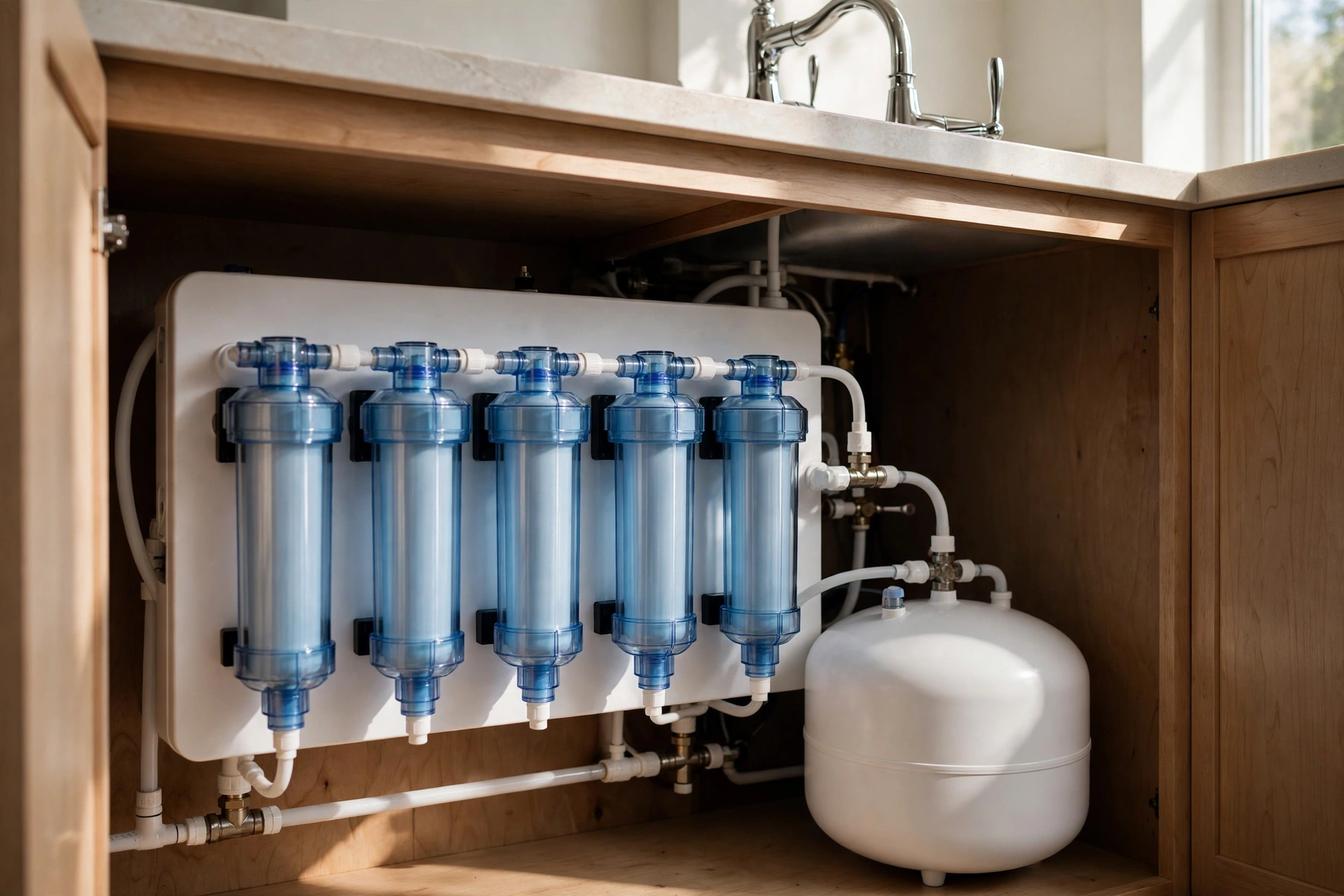
iSpring RCC7AK — the #1 best-seller in Amazon’s Under-Sink & Countertop Filtration category. A 6-stage, 75 GPD tank-based system with iSpring’s patented alkaline remineralization stage, a transparent first-stage housing so you can see filter condition, and NSF/ANSI 58 certification for the full system. One-year warranty with lifetime technical support out of Atlanta, GA.
APEC ROES-PH75 — APEC’s Essence-series alkaline flagship. Also 6 stages, also 75 GPD, also tank-based. Carries the WQA Gold Seal certification, uses APEC’s high-purity calcium carbonate mineral cartridge, and is designed and assembled in the USA. Two-year warranty, and a brand that has been building RO systems since the mid-90s.
Both are excellent. The differences are in the details — and the details are exactly what we’re about to get into.
Side-by-Side Spec Comparison
| Specification | iSpring RCC7AK | APEC ROES-PH75 |
|---|---|---|
| Stages | 6 (with alkaline remineralization) | 6 (with alkaline remineralization) |
| Output | 75 GPD, 3.2-gal storage tank | 75 GPD, storage tank |
| Alkaline media | Natural mineral + calcite AK stage | High-purity calcium carbonate |
| Certification | NSF/ANSI 58 (full system) | WQA Gold Seal |
| Pure-to-drain ratio | ~1:2 | ~1:3 |
| Faucet | Brushed nickel, top-mounted patented design | Chrome designer faucet, lead-free |
| Feed pressure | 45–70 psi | 40–85 psi |
| Transparent first housing | Yes — see filter condition at a glance | No |
| Annual filter cost | ~$50–$60 | ~$80–$100 |
| Warranty | 1 year + lifetime support | 2 years |
| Power needed | No — runs on water pressure | No — runs on water pressure |
Spec sources: Amazon product listings for both models, iSpring and APEC documentation, and the comparison tables published by Affordable Water Systems. Street prices for both sit in the same $200s band — check the live Amazon listings, since they move.
The Alkaline Stages: Where They Actually Differ
This is the heart of the comparison, so let’s be precise. iSpring’s AK stage uses a blend of natural mineral rocks and calcite. APEC’s pH+ stage uses only high-purity calcium carbonate from a certified source — and APEC is pointed about this, noting that some competitors’ “mineral blends” come from uncertified sources.
In practice, both raise pH into the mildly alkaline range and add a touch of calcium. Owners of both report noticeably better taste than plain RO water. If you’re choosing purely on the alkaline stage, there’s no clear technical knockout — APEC’s sourcing transparency is a plus for the cautious, iSpring’s blend has years of owner satisfaction behind it. Call it a draw with different philosophies.

iSpring RCC7AK — 6-Stage Alkaline RO System
Best for: value seekers who want alkaline water, lower filter costs, and the #1 best-selling under-sink RO on Amazon.
APEC ROES-PH75 — 6-Stage Alkaline RO System
Best for: buyers who want USA-made filters, a 2-year warranty, and WQA Gold Seal certification.
Filter Costs Per Year: The Real Price Gap
Upfront, these two cost nearly the same. The real difference shows up every year in filters:
💰 Filter cost-per-year box
- iSpring RCC7AK: ~$50–$60/year. Prefilters (stages 1–3) every 6–12 months, RO membrane every 2–3 years, alkaline stage roughly every 6–12 months. iSpring sells pre-bundled filter packs (F4AK, F9K, F19K75, F28K75) that make reordering painless.
- APEC ROES-PH75: ~$80–$100/year. Prefilters every 6–12 months, membrane every 2–4 years, alkaline filter about once a year. APEC filters last a bit longer individually — but cost more per set.
- Five-year filter total: roughly $250–$300 (iSpring) vs $400–$500 (APEC).
Over a decade of ownership, that gap adds up to a couple hundred dollars. If you want to see how filter math works across a whole product family, our iSpring filter replacement cost guide goes full spreadsheet on it.
Installation and Daily Living
Both are classic tank systems: filter housings mounted on a bracket, a pressurized storage tank, a dedicated faucet, and a drain saddle connection. If you’ve ever installed an under-sink filter, the shape will be familiar. DIY installation is very doable for both — most owners report 1–2 hours — and neither needs electricity. That’s a genuine advantage over tankless systems: no outlet required, and the water keeps flowing during power outages.
iSpring has two nice usability touches: the transparent first-stage housing (you can literally see when the sediment filter is getting grimy — no guessing) and a patented top-mounted faucet fastener that lets you tighten the faucet from above the counter instead of wrestling underneath. Small things, but owners mention them constantly.
APEC counters with a reputation for tank-like build quality and some of the best phone support in the business — a real human in the USA who knows RO systems. Their filters are made in the USA, which matters to a lot of buyers, and the 2-year warranty (vs iSpring’s 1 year) is the longest in this class.
The trade-offs versus modern tankless systems are worth naming: these take up real cabinet space (housings + tank), they waste more water (1:2 to 1:3 pure-to-drain), and flow from the tank is slower than a tankless pump. If cabinet space is your top priority, our best tankless RO roundup covers the alternative universe. But tank systems are simpler, cheaper to run, and don’t care about your electrical panel — for a lot of households, that’s the smarter trade.
Where Each One Wins
Pick the iSpring RCC7AK if: you want the best value in alkaline RO — lower upfront cost, meaningfully cheaper filters year after year (~$50–$60), the see-through sediment housing, less wastewater (1:2 vs 1:3), and the #1 best-seller track record. For most households, this is the pick.
Pick the APEC ROES-PH75 if: USA-made filters and a 2-year warranty matter to you, you like APEC’s longer track record and support reputation, you want WQA Gold Seal certification, or your feed pressure is on the low side of iSpring’s 45–70 psi window (APEC accepts 40–85 psi). The higher filter cost is the price of those priorities.
If you’re still torn between the two brands in general — not just the alkaline models — our original iSpring vs APEC showdown covers the standard RCC7 vs ROES-50 matchup in the same detail.
Who Should Skip Both
Quick honesty check before you buy:
- You have almost no cabinet space. Both need room for housings plus a tank. A tankless system is the answer — see the roundup linked above.
- You’re on well water with iron or sulfur. Neither is designed for that without pre-treatment. Read our well-water RO guide first.
- You only care about the cheapest possible RO. The standard iSpring RCC7 (non-alkaline) or APEC ROES-50 cost less and filter just as well — you just don’t get the mineral stage.
- You expect “alkaline water” to fix your health. It won’t. It’s about taste. Both brands are honest about this if you read their fine print; be honest with yourself too.
The Verdict: Which Alkaline RO Wins in 2026?
For most households, the iSpring RCC7AK wins — barely, but wins. Same 75 GPD, same 6 stages, same good-tasting alkaline water, for less money upfront and substantially less money every year in filters. The transparent housing and the #1 best-seller status (tens of thousands of owners) aren’t marketing — they’re evidence that the thing works and keeps working.
The APEC ROES-PH75 is the pick for buyers who rank warranty length, USA manufacturing, and brand pedigree above long-term filter cost. It’s a superbly built system from a company that’s been doing this since the 90s, and the 2-year warranty is genuinely the best in class.
Either way, you’re getting certified, great-tasting alkaline RO water for the price of a few months of bottled water. That’s the part that actually matters.
Frequently Asked Questions
Which is better, iSpring RCC7AK or APEC ROES-PH75?
For most buyers, the iSpring RCC7AK — it costs less to buy and notably less to maintain (~$50–$60/year in filters vs ~$80–$100), wastes less water (1:2 vs 1:3), and is the #1 best-seller in its category. The APEC wins on warranty (2 years vs 1) and USA-made filters.
Do I need a plumber to install either system?
No. Both are designed for DIY installation in 1–2 hours with basic tools — no electricity needed, just a cold-water connection, a drain saddle, and a faucet hole. If you’ve never touched plumbing, a handyman can do it in under an hour.
How often do the alkaline filters need replacing?
About once a year for both — iSpring’s AK stage every 6–12 months depending on water quality, APEC’s pH+ calcium cartridge about every 12 months.
Which system wastes less water?
The iSpring RCC7AK, at roughly 1:2 pure-to-drain versus the APEC ROES-PH75’s roughly 1:3. In plain terms: iSpring sends about 2 gallons down the drain per gallon of drinking water; APEC sends about 3.
Is WQA Gold Seal better than NSF/ANSI 58 certification?
They’re both legitimate third-party certifications — WQA Gold Seal tests against NSF/ANSI standards. Neither is a fake badge. The practical difference for you: iSpring certifies the full RCC7AK system to NSF/ANSI 58; APEC certifies the ROES-PH75 through WQA’s Gold Seal program. Both mean an independent lab verified the claims.
Does alkaline RO water actually taste different?
Yes — and that’s the honest reason to buy one. Plain RO water tastes flat and slightly acidic; the mineral stage brings back a touch of calcium and a cleaner, more “spring water” taste. Don’t expect health miracles, but do expect better-tasting water.
Can these systems handle well water?
Not without help. Both are designed for municipal water. Well water with iron, manganese, or heavy sediment needs pre-treatment first, or you’ll destroy prefilters in weeks. Get your water tested before buying anything.