

There’s a special kind of tired that only hits at 2:47 AM, when the baby is screaming and you’re standing in a dark kitchen trying to remember how many scoops went in. In that moment, the last thing you want to wonder about is whether the water coming out of your tap is actually okay for your kid.
I’ve spent a lot of hours on this, because as a parent, “good enough” isn’t good enough. Short version: a good reverse osmosis system is one of the most reliable ways to keep your baby’s formula water free of what matters most — lead, nitrates, PFAS, arsenic, and excess fluoride. The honest trade-off: RO strips out minerals too, which shapes which pick is right for you.
Below are five systems I’d actually recommend to a friend, ranked with a parent’s priorities in mind: what it removes, how it fits a busy kitchen, and what it costs after year one.
As an Amazon Associate, Clearove may earn from qualifying purchases – at no extra cost to you. Prices and availability change; the price on Amazon at checkout is what counts.
What Actually Matters in Formula Water
Before the picks, here’s the science in plain English. The contaminants that show up again and again in infant-health guidance are lead, nitrates, PFAS, arsenic, and fluoride. Lead and nitrates are the two that keep me up at night the most — nitrates in particular are dangerous for very young babies because of how they interfere with oxygen in the blood.
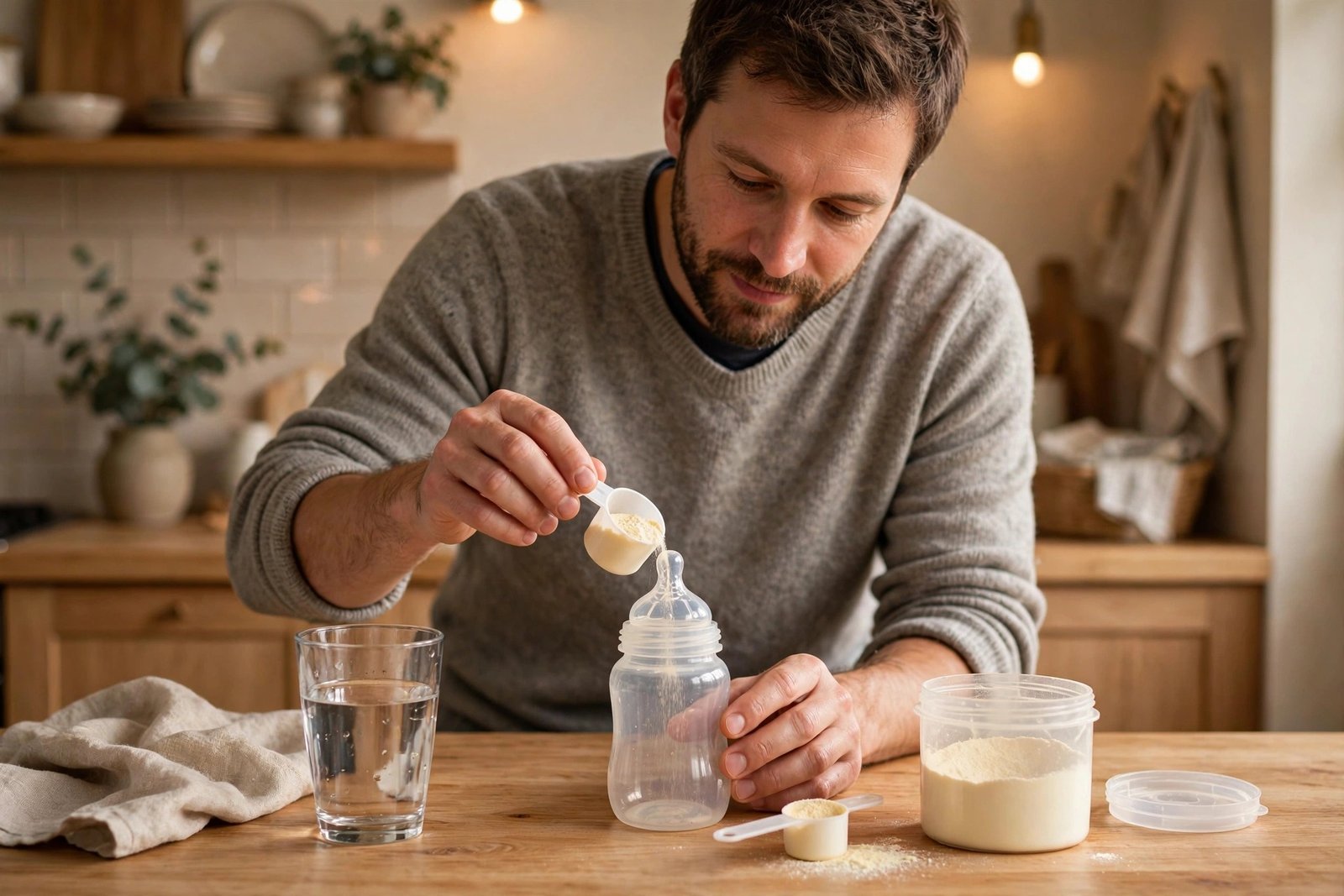
A quick note on fluoride: the American Academy of Pediatrics considers fluoridated tap water acceptable for mixing formula. But they also note that exclusive use of fluoridated water can raise the risk of mild dental fluorosis — those faint white marks on teeth. So if your tap runs high in fluoride, switching formula water to purified or low-fluoride water is a reasonable parent’s option. RO removes fluoride, which is exactly why it’s popular for bottles. If you want the full breakdown, I’ve covered it here: does reverse osmosis remove fluoride.
Two non-negotiables, no matter which system you pick:
- On well water? Test first. Have a certified lab test for bacteria, nitrates, lead, and PFAS before a single bottle is mixed. A comprehensive test usually runs in the ~$150–300 range, but get the current local price — it’s the cheapest peace of mind you’ll ever buy.
- Under 3 months? Boil. For very young newborns, pediatric guidance says to boil the prepared water briefly even if it came from a filter. An RO system replaces neither your pediatrician’s advice nor basic sterilization for the tiniest babies.
And the honest caveat I promised: RO water is nearly mineral-free, which some people find tastes flat. For a family drinking it all day, models with alkaline or mineral add-back stages simply taste better. I wrote up the options in how to remineralize RO water if you want to go that route. Wondering about daily drinking in general? Is RO water safe to drink every day covers that too.
The 5 Best RO Systems for Baby Formula (2026)
| System | Type | Certifications (stated) | Standout spec | Price band |
|---|---|---|---|---|
| AquaTru Classic | Countertop, no plumbing | NSF/ANSI 42, 53, 58, 401 (via IAPMO) | 4-stage Ultra RO; 84 contaminants incl. lead, PFAS, fluoride, microplastics; 0.75-gal tank | ~$475 observed on aquatru.com — check the current price |
| Waterdrop G3P600 | Under-sink, tankless | — | 600 GPD — fills bottles fast | Check the current price |
| iSpring RCC7AK | Under-sink, permanent | NSF/ANSI 58 | Alkaline add-back stage for better taste | Check the current price |
| APEC ROES-50 | Under-sink, permanent | — | Budget permanent option | Often under $200 — check the current price |
| Waterdrop K19-S | Countertop, compact | — | 3:1 pure-to-drain ratio | Check the current price |
1. AquaTru Classic — The Safest No-Plumbing Pick (Best Overall)
If I could only recommend one system to a new parent, it would be this one. The AquaTru Classic sits on your countertop, plugs in, and that’s the entire installation. No drilling, no landlord permission, no plumber. For renters — or anyone who breaks out in hives at the thought of crawling under a sink — that alone is worth a lot.

What sold me is the certification stack. It’s certified to NSF/ANSI standards 42, 53, 58, and 401 through IAPMO — 401 is the one that covers newer contaminants like pharmaceuticals and microplastics. The company lists 84 contaminants it reduces, including lead, PFAS, fluoride, and microplastics. That’s the exact shortlist a parent cares about. The 4-stage Ultra RO does the heavy lifting, and the 0.75-gallon tank means you’re not waiting around mid-bottle.
The trade-offs, honestly: it’s the priciest pick here — around $475 at the time of writing on aquatru.com, so check the current price. It takes up real counter space, and a big family doing constant bottles will refill that 0.75-gallon tank often. But for pure “safest water, zero installation,” nothing else here touches it.
Best for: renters, grandparents’ houses, anyone who wants certified contaminant removal without touching the plumbing.
2. Waterdrop G3P600 — The Family Workhorse (Best Under-Sink)
Once you’re making six-plus bottles a day, a countertop unit starts to feel like a part-time job. The Waterdrop G3P600 lives under the sink and pushes out 600 gallons per day in a tankless design — meaning fresh-filtered water on demand, no storage tank sitting around, and bottles filled in seconds. For a detailed look at the category, see the best tankless RO systems.
The trade-offs, honestly: it’s a permanent under-sink install, so you’ll need a spare faucet hole or one plumber visit. It costs more up front than the budget picks below — but if your kitchen is the bottle factory, the speed pays you back daily.
Best for: homeowners and busy families who want maximum flow with minimum counter clutter.
3. iSpring RCC7AK — The Best-Tasting Budget Permanent System
This is my pick for budget-minded parents who want a permanent under-sink system the whole family will actually enjoy drinking. The RCC7AK is NSF/ANSI 58 certified, and its standout feature is the alkaline remineralization stage — it adds some minerals back after filtration, so the water tastes noticeably better than stripped-bare RO water. Remember that flat-taste caveat from earlier? This is the built-in fix.
The trade-offs, honestly: like any traditional under-sink RO, it keeps purified water in a storage tank under your sink, which takes up cabinet space, and filter changes mean the classic multi-stage cartridge routine. But iSpring’s long track record and US-based support count for a lot when something under your sink needs attention at an inconvenient hour.
Best for: families who want great-tasting RO water for everyone — bottles, cooking, and drinking — at a sensible price.
4. APEC ROES-50 — The Sub-$200 Permanent Option
A tight budget shouldn’t mean settling for questionable tap water. The APEC ROES-50 is a permanent under-sink RO system that’s often listed under $200 at the time of writing — check the current price — making it the most affordable way onto this list.
The trade-offs, honestly: at this price you get a straightforward, no-frills system — no alkaline stage, smart display, or tankless speed. It’s still a permanent install, so renters should stick with the countertop picks. But for the core job — stripping lead, fluoride, nitrates, and the rest out of formula water — it does what it says.
Best for: budget-conscious homeowners who want permanent RO protection without the premium price.
5. Waterdrop K19-S — The Compact Countertop for Small Kitchens
Small apartment kitchen? The K19-S is Waterdrop’s compact countertop answer: no plumbing, small footprint, and a genuinely impressive 3:1 pure-to-drain ratio — meaning less water wasted per glass than most countertop units manage. If you’re comparing countertop styles, the best countertop RO systems roundup has more context.
The trade-offs, honestly: compact means smaller capacity, so a household burning through bottles all day will refill it often, and it still occupies counter space. But for a small kitchen where under-sink installation isn’t an option, the efficiency and size are hard to beat.
Best for: apartment dwellers and small kitchens that need RO water without installation.
What You’ll Spend After Year One (Filter Costs)
Filter cost-per-year — honest numbers only. No single verified annual figure covers every home, because your tap water decides how fast filters wear out. Here’s what’s verifiable per pick:
- AquaTru Classic: long-life replacement filter kits sold by the maker — check the current kit price on the listing.
- Waterdrop G3P600: replacement composite filter sets — check the current price on the listing.
- iSpring RCC7AK: iSpring sells multi-year packs for the RCC7 family — the owner manual lists an F7-GAC 1-year pack, F15-75 2-year pack, and F22-75 3-year pack (shared by RCC7/RCC7P models); confirm which apply to the AK variant on the listing.
- APEC ROES-50: standard replacement cartridge sets — typically the cheapest on this list; check the current price.
- Waterdrop K19-S: compact replacement filters — check the current price on the listing.
Rule of thumb: budget for roughly one full replacement set per year, and a TDS meter reading now and then tells you when filters are actually spent instead of guessing.
Who Should NOT Buy an RO System for Formula
I’d rather talk you out of a purchase than sell you the wrong one. Pause if any of these sound like you:
- Your tap water is already excellent and your pediatrician is comfortable with it. If your municipal report is clean and your doctor gives the thumbs-up, an RO system is a nice-to-have, not a need. Don’t let anyone scare you into it.
- You’re on well water and haven’t tested it. An RO system is not a substitute for a certified lab test. Test first, then choose filtration based on what the test actually finds.
- You expect it to replace boiling for a newborn under 3 months. It doesn’t. Sterilization guidance for the youngest babies stands on its own.
- Nobody in the house will change filters. A neglected RO system with exhausted filters is worse than no system at all, because it gives you false confidence. If maintenance won’t happen, stick with a simpler routine you’ll actually keep.
- You want minerals left in. RO strips nearly everything, good and bad. If that bothers you, either pick an alkaline model like the RCC7AK above or plan to remineralize.
One more thing I won’t do: call any of these “doctor-recommended.” They’re well-certified water filters, not medical devices. Your pediatrician’s advice always outranks a product page — including this one.
FAQ
Is RO water safe for baby formula?
Yes. RO water removes the contaminants parents worry about most — lead, nitrates, PFAS, arsenic, and fluoride — which is why it’s widely used for formula. The one caveat is that it’s nearly mineral-free, so many families prefer an alkaline/mineral model for everyday drinking water, or remineralize. For babies under 3 months, still follow your pediatrician’s sterilization guidance.
Does RO remove fluoride?
Yes — reverse osmosis is one of the few home methods that reliably removes fluoride. That’s a plus if your tap is high in fluoride and you’re concerned about mild dental fluorosis from exclusive formula use. The AAP considers fluoridated tap water acceptable for formula, so this is a parent’s-choice call.
Is distilled or RO better for formula?
Both work short-term — bottled water labeled “purified,” “distilled,” or “prepared by reverse osmosis” is fine. Your own RO system wins long-term on cost and convenience (no hauling jugs). Avoid spring water for formula; its mineral content is unpredictable.
Do I need to boil RO water for newborns?
For babies under about 3 months, pediatric guidance says to boil prepared formula water briefly even when it comes from a filter. An RO system gives you cleaner starting water, but it doesn’t replace sterilization for the youngest newborns.
Can I use well water for formula?
Only after a certified lab test — bacteria, nitrates, lead, and PFAS — before any formula use. Nitrates are especially risky for young infants. A comprehensive test typically runs around $150–300; confirm the current price locally, then choose filtration based on the results.
Does RO water need remineralizing for babies?
Not strictly — formula itself contains the minerals babies need, so mineral-free RO water mixed with formula is fine. Remineralizing matters more for the water the rest of the family drinks straight, where flat-tasting RO gets old fast. Alkaline models like the iSpring RCC7AK handle this automatically.