

As an Amazon Associate I earn from qualifying purchases.
You’ve got the system installed, the under-sink unit is humming along quietly, and the water coming out of that little chrome faucet tastes… well, almost like nothing. Clean, yes. But at some point you catch yourself staring at the glass and wondering: is reverse osmosis water really safe to drink every single day?
The short answer is yes, it is. Reverse osmosis water is widely considered safe for daily drinking, and millions of households drink nothing else — year after year — without any problem. But there’s a perfectly fair follow-up hiding inside that question, and it’s the one about minerals. That part deserves an honest answer, not a sales pitch and not a scare story. So here it is, both sides, straight.
What reverse osmosis actually removes — minerals included
Let’s start with what the membrane does, no sugarcoating. A reverse osmosis membrane forces water through pores so tiny that it rejects up to around 99% of dissolved solids. That includes the bad stuff people install these systems for: lead, fluoride, chlorine, arsenic, nitrates, PFAS, and more. That’s the whole point, and it works.
But the membrane can’t tell the difference between a contaminant and a mineral. Calcium and magnesium — the stuff that makes water “hard” — get rejected too, along with sodium, potassium, and trace elements. This is a fact the industry sometimes glosses over. RO water comes out very low in dissolved minerals. If your tap water used to read a couple hundred parts per million on a TDS meter, the RO version might read close to single digits. That’s normal, not a defect.
The mineral question, answered without the drama

Here’s where most articles either panic or hand-wave, so let me be straight with you: most of the minerals your body actually uses come from your food, not your water.
Think about it for a second. A glass of milk, a handful of almonds, a bowl of spinach, a piece of salmon — these deliver calcium, magnesium, and potassium in amounts that dwarf whatever was dissolved in your tap water. For a person eating even a halfway normal diet, water is a minor side-note in their mineral intake, not the main chapter. Nobody was ever told to skip vegetables because their water “has minerals.”
Now, the honest caveat — because there is one. For people whose diets are very low in minerals, or in parts of the world where water historically provided a meaningful share of calcium and magnesium intake, stripping minerals out of water can matter more. The World Health Organization has published technical reports looking at very-low-mineral drinking water over the years, and its position is essentially: worth paying attention to in specific situations, but not a basis for calling RO water unsafe. You’ll sometimes see alarmist sites claim “the WHO says RO water is dangerous.” That is a misreading of what those reports actually say. They’re technical discussions about population-level nutrition, not a warning against your kitchen system.
So for the typical household eating regular meals: the minerals you “lose” when you switch to RO water were never doing the heavy lifting in the first place.
“RO water leaches minerals from your body” — the myth, honestly handled
This is the big scary one, and you’ve probably seen it phrased dramatically: because RO water is “hungry” for minerals, it supposedly pulls them out of your bones, teeth, and tissues as it passes through.
Let’s apply some common sense to this. Water passes through your stomach and intestines in a matter of hours. The idea that it meaningfully dissolves minerals out of your body on its way through isn’t supported by the kind of evidence you’d need for a claim that serious. Your body’s mineral balance is governed by hormones, kidneys, digestion, and diet — a tightly managed system that doesn’t get overthrown by a glass of low-TDS water.
Could water that’s extremely pure taste “flat” and theoretically absorb a few minerals in a laboratory sense? Sure — that’s basic chemistry, and in a petri dish it’s true. In a living person who eats lunch, it doesn’t work that way. This is one of those ideas that sounds scientific enough to go viral and falls apart the moment you ask for real-world evidence. Drink your food-based minerals like everyone else, and the “leaching” worry evaporates.
Taste and pH: what you’ll actually notice
The one genuine downside of standard RO water is taste — and even that is mild. Some people describe it as flat or slightly bland compared to mineral-rich tap or spring water. That’s simply the absence of the calcium and magnesium your taste buds were used to. Others never notice at all, especially if their old tap water tasted of chlorine.
You may also see the number on a pH strip land slightly below 7.0. Pure water absorbs a tiny bit of CO2 from the air, which nudges it slightly acidic. This sounds alarming until you remember that coffee is around pH 5, orange juice is around 3.5, and your stomach sits near pH 2. Slightly-acidic water is not a health event; it’s just chemistry being normal.
Who might genuinely want remineralization?
Remineralization isn’t a medical necessity for most people, but it’s a legitimate preference — and for a few folks, a sensible choice:
- Taste-first drinkers. If RO water tastes flat to you, a little mineral content back makes it noticeably more pleasant. Plenty of people prefer it.
- Very low-mineral diets. If your diet is unusually low in calcium and magnesium — extreme restriction diets, long fasts — every little source counts a bit more.
- Coffee and tea people. This one’s practical, not medical: espresso and tea extract better and taste rounder with some mineral content in the water. Baristas obsess over water chemistry for a reason.
- Peace of mind. If the whole mineral question just nags at you, remineralizing is cheap and easy. Sleeping better is worth something too.
3 simple ways to add minerals back
You don’t need to rip out your system to get minerals back into your water. Three common approaches, from simplest to most complete:
1. An alkaline remineralization cartridge. This is a small inline filter added after the RO membrane that passes water over calcium carbonate or similar media, adding back a modest amount of minerals and nudging the pH up a bit. Many systems accept one as an add-on stage.
2. An alkaline / pH+ RO system. Instead of bolting something on, you buy a system designed with a built-in remineralization stage. The iSpring RCC7AK and the APEC ROES-PH75 are the two classic examples — both are full under-sink RO systems that add calcium back at the final stage for taste and a more balanced pH. (More on these below.)
3. Mineral drops. Concentrated liquid mineral drops added to your glass, a few drops at a time. They’re the zero-installation option — popular with renters and travelers — though the cost adds up over time compared to a cartridge.
Quick answers to the questions everyone asks
Does RO remove the healthy minerals?
Yes — along with everything else, RO removes dissolved calcium, magnesium, and other minerals. For most people this doesn’t matter nutritionally, because food provides the vast majority of dietary minerals. If the idea bothers you, a remineralization stage puts some back.
Will RO water dehydrate me?
No. This is a strange myth. RO water hydrates you exactly like any other clean water. Your kidneys handle hydration through water volume and electrolytes from food; the mineral content of the water itself plays essentially no role.
Is RO water better than spring water?
“Better” depends on what you mean. RO water is more consistent — you know exactly what’s not in it, since the membrane strips out fluoride, lead, PFAS, and the rest. Spring water keeps its natural minerals but also keeps whatever else was in the ground, and quality varies by source. If your tap water has real contamination concerns, RO wins on safety control. If your tap water is already clean, spring water’s minerals are a nice bonus.
Do I need to remineralize my RO water?
Need? For most healthy adults eating normally, no. Want to, for taste or peace of mind? That’s a perfectly good reason. It’s inexpensive and there’s no downside to it.
Is RO water okay for kids and pets?
Yes — it’s just clean water. Kids get their minerals from milk, food, and everything else kids eat. For pets, RO water is fine too; dogs and cats get their nutrition from their food, not their water bowl. If anything, removing chlorine and heavy metals from your pet’s water is a small upgrade, not a risk.
Step one: actually know what’s in your water
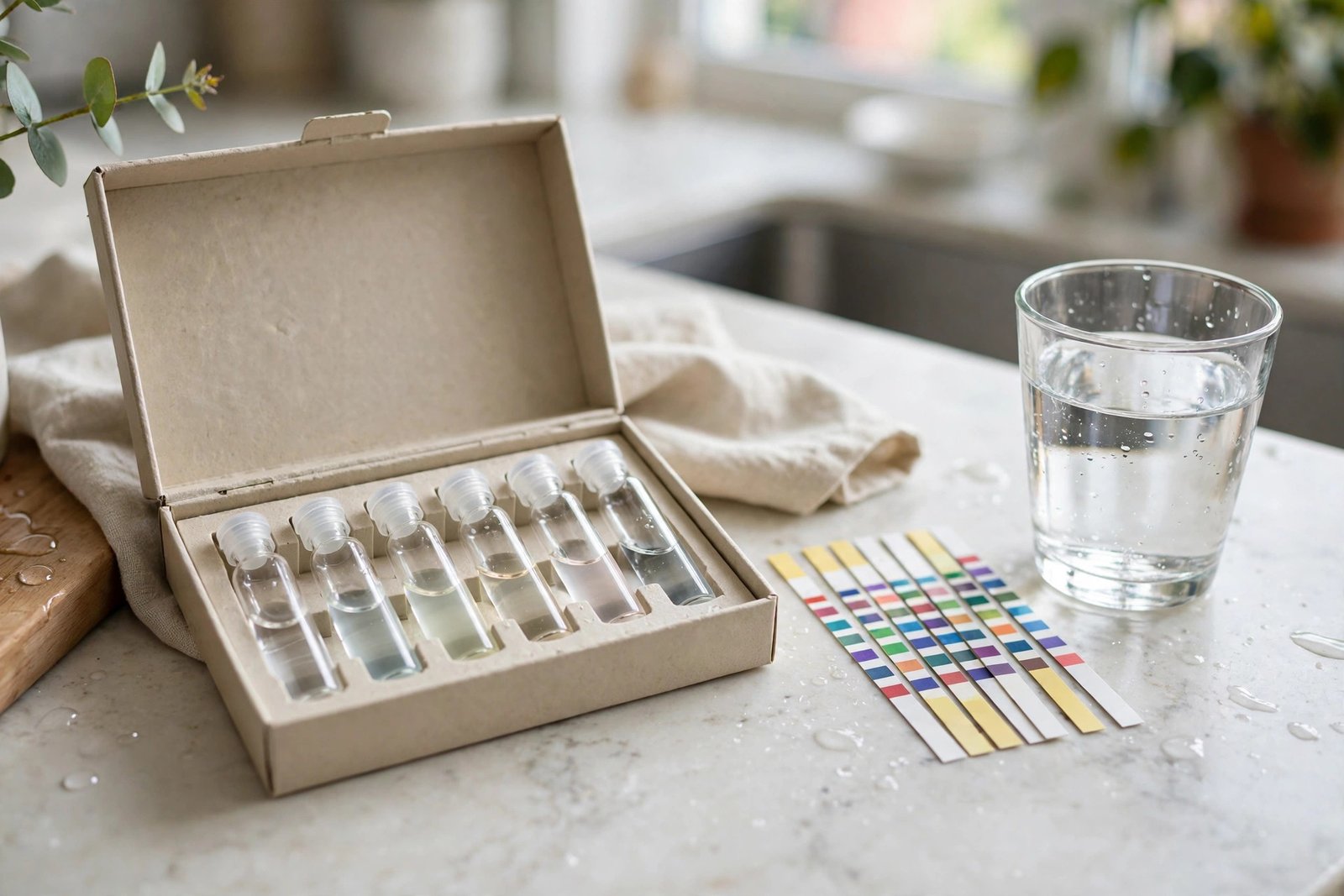
Here’s the thing most “is it safe?” articles skip: before you worry about minerals, it helps to know what your water looks like now. A ten-second TDS reading tells you how much dissolved stuff is in your tap water versus your RO water, and it’s the single cheapest reality check in this whole hobby.
HM Digital TDS-EZ Water Quality Tester. The little purple pen-style meter that half the water forums swear by — thousands of reviews, 0–9990 ppm range, 1 ppm resolution, and a hold button so you can read it without squinting into the glass. Dip it in your tap, dip it in your RO water, and you’ll see the membrane doing its job in real time. If you’re also curious about specific contaminants like lead, our tap water testing guide walks through full test kits step by step.
Want the best of both worlds?
If you like the idea of RO purity plus minerals back in the glass — the contaminant protection of reverse osmosis with the taste and pH balance of mineral water — you don’t have to choose. These two systems build the remineralization stage right in:
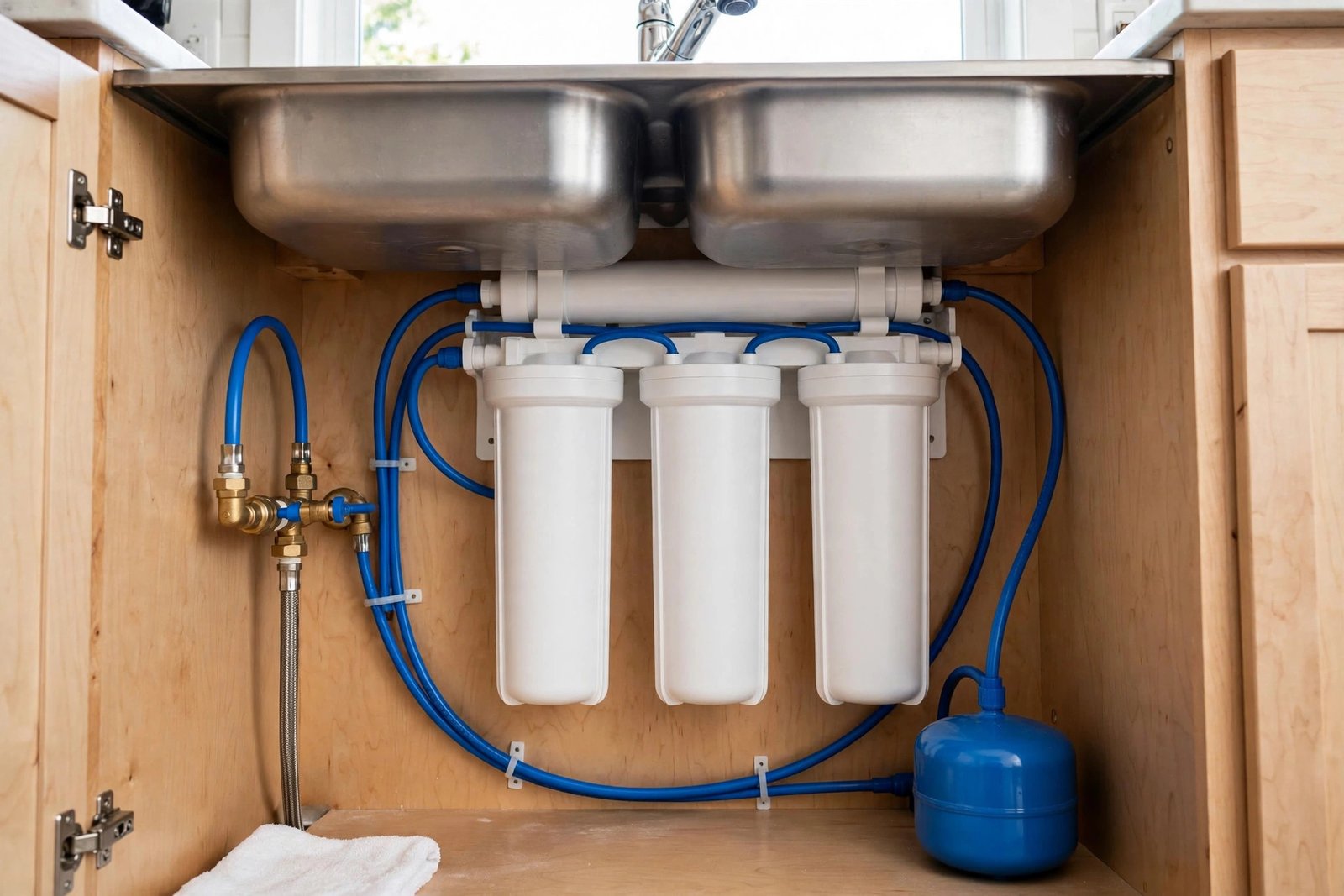
iSpring RCC7AK. A 6-stage, 75 GPD under-sink system with full-system NSF/ANSI 58 certification, and its signature final stage is an alkaline remineralization filter that restores minerals and balances pH. It’s the best-known “RO + minerals” combo on the market, and the one we recommend first when readers ask about the mineral question.
APEC ROES-PH75. APEC’s answer to the same question: a 6-stage, 75 GPD system with a calcium carbonate cartridge that adds calcium back for taste and alkalinity. WQA-certified, assembled in the USA, and a longtime favorite for people who want their RO water to drink more like natural spring water.
Bottom line: reverse osmosis water is safe to drink every day, minerals included or not. The filtration removes the things that can genuinely harm you — lead, PFAS, fluoride, arsenic — and the minerals it takes along for the ride are ones your diet replaces easily. And if you’d still rather have them in your glass, a remineralizing system gives you both. That’s not a compromise. That’s just good water.