

As an Amazon Associate I earn from qualifying purchases.
Short answer first: yes — reverse osmosis removes fluoride, and it does it better than almost anything else you can install in a home. If fluoride is the reason you’re shopping for a water filter, RO is the technology that actually delivers where carbon filters and filter pitchers quietly fail.
But here’s the part most brand pages won’t tell you: not every RO system removes fluoride equally well. Published removal rates cluster between 90% and 99%, and where your system lands depends on the membrane, your water pressure, and how well the thing is maintained. So let’s skip the marketing and look at what the science actually says.
How Much Fluoride Does RO Remove? The Real Numbers
Pull the published sources together and a consistent picture emerges:
- 90–95% fluoride reduction is the range cited most often across water-industry sources.
- 90–97% shows up in several retailer and lab-testing roundups.
- ~98% is Culligan’s published figure — but note that’s for its own Aquasential system specifically, a manufacturer’s number for their hardware.
- ~93% was the measured result for the AquaTru Carafe’s Ultra RO filter, per the maker’s own data sheet as quoted in an independent review.
The pattern matters more than any single number: the floor is consistently high. Every credible source lands at 90% or better, while the exact ceiling moves with the specific system. That’s a far more honest answer than a flat “RO removes 99% of fluoride,” because it tells you what a healthy, working system actually delivers in a real kitchen.
One caveat worth knowing: those figures describe a system that’s new, properly pressurized, and maintained. A worn-out membrane with slipping rejection fails at everything — fluoride isn’t special in that regard. If your numbers are drifting, the fix is maintenance, not a different technology.
Why RO Works on Fluoride (and Your Pitcher Filter Doesn’t)
This is the part that surprises most people. You’d assume a good carbon filter — the thing that fixes taste and odor so well — would grab fluoride too. It doesn’t. Standard carbon and pitcher-style filters remove less than 10% of fluoride, according to industry testing.
The reason is physics. An RO membrane works by size exclusion at a near-absurd scale: water molecules slip through pores so tiny that dissolved ions can’t follow. As Aquasana explains on its own fluoride page, the fluoride ion is physically larger than a water molecule — so it gets trapped on the feed side and flushed to the drain along with everything else the membrane rejects.
Activated carbon works completely differently — by adsorption, where contaminants stick to the carbon’s surface. Fluoride ions don’t stick. They’re small, negatively charged, and perfectly content staying dissolved. Running water through more carbon doesn’t change that. It’s the wrong tool for the job, the way a screwdriver is the wrong tool for a nail.
That’s also why RO is in such rare company. Only three practical home methods remove meaningful amounts of fluoride: reverse osmosis, activated alumina, and distillation. Everything else is wishful thinking — worth remembering the next time a pitcher filter box hints otherwise.

What Changes Your Fluoride Removal Rate
So why do I keep saying “it depends” if RO so clearly works? Because the membrane is a physical barrier operating under real-world conditions, and a few things move your number within that 90–99% band:
- Membrane age and condition. A fresh membrane at full rejection is your best case. Chlorine damage, scale buildup, and plain wear lower rejection across the board — fluoride included. This is the single biggest variable, and it’s why maintenance discipline matters more than the logo on the housing.
- Water pressure. RO membranes need pressure to do their job. Chronically low pressure means lower rejection rates and more water sent to drain. It’s one of the quiet reasons booster-pump tankless systems have taken over the market.
- Your starting fluoride level. Fluoridated city water carries modest, regulated levels; some well water runs naturally higher. Percentage removal stays roughly constant, but the absolute numbers in your glass will differ.
- System design. Good pre-filtration protects the membrane and keeps rejection high. Small countertop units running at lower pressure tend to sit at the lower end of the range.
None of this changes the verdict — RO works. But it explains why two neighbors with two different systems can test slightly different fluoride numbers, and why “just buy any RO” is lazy advice.
NSF/ANSI 58: The Certification That Actually Covers Fluoride
Here’s a practical tip that cuts through marketing fog: NSF/ANSI 58 is the standard written specifically for reverse osmosis drinking water treatment units, and fluoride reduction is one of the claims it covers. Both Aquasana and Culligan reference it on their fluoride pages for exactly this reason.
A manufacturer saying “removes fluoride” means very little on its own. A system certified to NSF/ANSI 58 — or tested against it by an accredited lab — has had its fluoride claim independently verified under a defined protocol. That’s the difference between a slogan and a result.
What to do with this: before buying any system for fluoride removal, pull up its performance data sheet (every legitimate RO brand publishes one) and find the fluoride line. It should state a tested reduction percentage — not a vague “reduces fluoride.” No data sheet, or no fluoride line on it? Keep shopping. Our iSpring filter guide walks through reading these sheets for a popular brand, and the skill transfers to any system you’re considering.
RO vs. the Other Fluoride Removal Methods
Fair comparison time — RO isn’t the only answer, so here’s how the three legitimate options stack up:
| Method | Fluoride removal | The catch |
|---|---|---|
| Reverse osmosis | 90–99% | Also strips beneficial minerals; produces some wastewater |
| Activated alumina | ~65% (pH-sensitive) | Lower reduction; needs the right pH range to perform; regular media replacement |
| Distillation | ~99% | Glacially slow; energy-hungry; flat-tasting water |
Activated alumina’s ~65% figure comes from retailer-published testing, and the pH sensitivity is the real catch — outside its ideal range, performance slides. Distillation is brutally effective and brutally impractical; nobody wants to wait hours for a pitcher of water.
For most households, RO is the sweet spot: near-distillation fluoride removal at a fraction of the hassle — and it takes out lead, PFAS, arsenic, and dozens of other contaminants in the same pass. If PFAS is also on your worry list, our RO and PFAS guide covers that angle in depth.
The Honest Health Conversation About Fluoride
I want to handle this carefully, because the internet does not.
The case for fluoride: at regulated levels, fluoride is added to municipal water deliberately to reduce tooth decay — one of the most studied public-health interventions in history. That’s the Culligan/EPA-aligned framing, and the dental evidence behind it is real.
The case for concern: critics point to overexposure risks like dental fluorosis in childhood, the WHO’s published cautions around long-term consumption of heavily demineralized water, and studies — referenced even on Aquasana’s own page — exploring thyroid effects at higher exposures.
My honest take: this is a personal decision, not a settled war, and I’m not going to pretend otherwise. What’s not debatable is that RO hands you the choice — fluoridated water in, water with ~95% less fluoride out. Whether you want that because of health concerns, taste, or simply wanting control over what’s in your glass, the technology doesn’t care about your reasons. It just works.
The question I hear right behind this one: is it safe to drink RO water long-term? The WHO has published discussion about mineral intake from demineralized water, and yes — RO strips calcium and magnesium right alongside the fluoride. The standard counterpoint: most of your minerals come from food, not water. Plenty of systems now add a remineralization stage to split the difference. I’m not your doctor, but from a pure filtration standpoint, RO water is about as clean as home water gets.
FAQ
How much fluoride does reverse osmosis remove?
Across published sources: 90–99%. The most commonly cited band is 90–95%, with some systems testing up to 97–98%. Your exact number depends on membrane condition, water pressure, and system design.
Does reverse osmosis remove beneficial minerals too?
Yes. The membrane can’t distinguish “good” dissolved solids from “bad” ones — calcium and magnesium get rejected alongside fluoride, lead, and everything else. Remineralization filter stages exist for people who want some minerals added back.
Do Brita or other pitcher filters remove fluoride?
Effectively no — under 10%, per industry testing. Carbon adsorption doesn’t capture fluoride ions. If a pitcher claims fluoride reduction, check whether it’s actually using activated alumina media, and temper your expectations even then.
Is it safe to drink reverse osmosis water every day?
RO water is widely consumed long-term. The WHO has discussed mineral intake from demineralized water, which is worth knowing about; many households address it through diet or a remineralizing stage. If you have specific health concerns, talk to your doctor — I’m a water guy, not a physician.
What is the best way to remove fluoride from drinking water?
For most homes: reverse osmosis. It offers the best combination of removal rate (90–99%), everyday practicality, and bonus removal of other contaminants. Activated alumina works (~65%) but is fussier; distillation is effective but slow.
Should I be worried about fluoride in my tap water?
Fluoride at regulated levels has documented dental benefits and documented critics. Rather than telling you what to think: test your water, read both sides, and decide for yourself. RO gives you the option either way — that’s the whole point.
Start With a Test, Then Decide
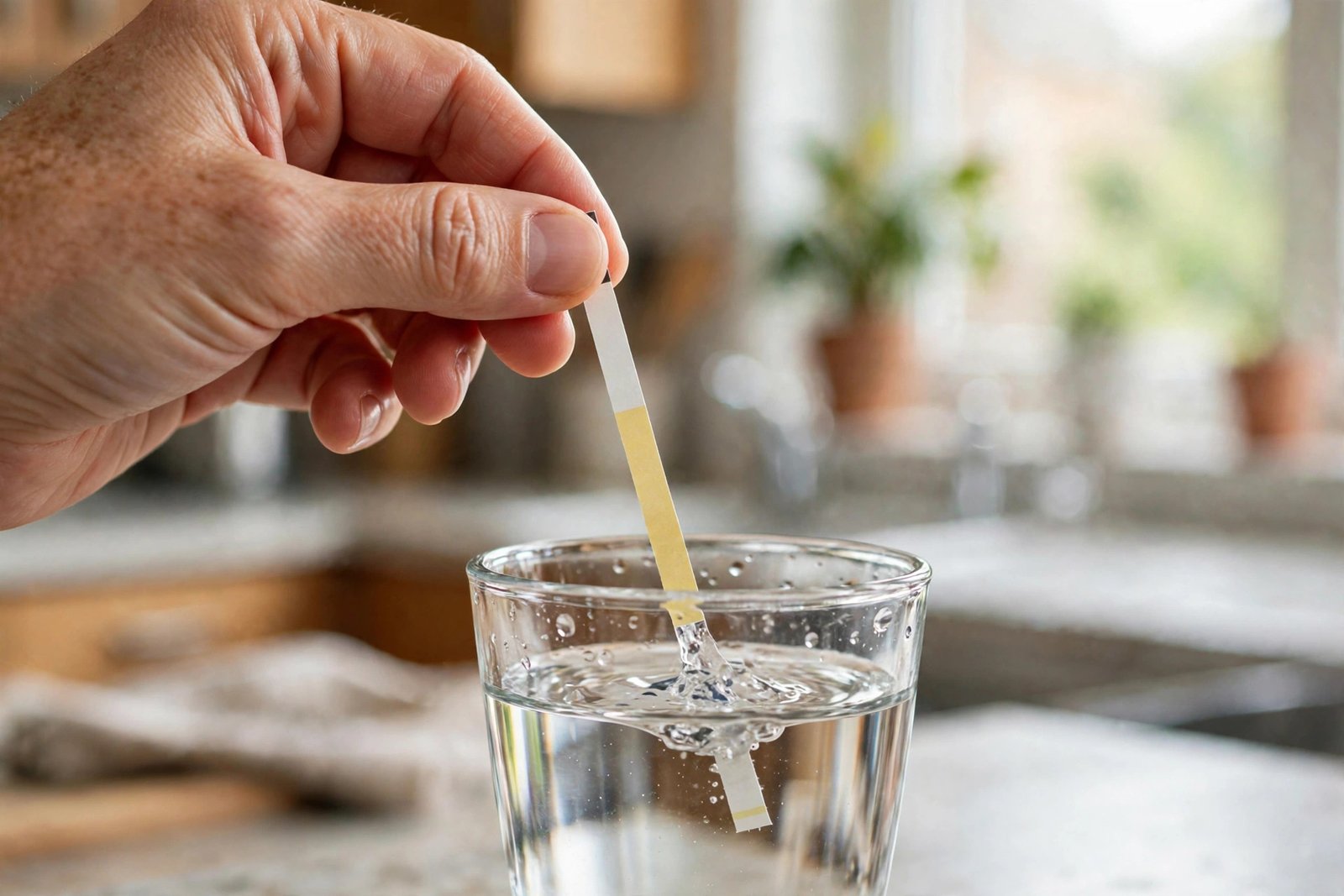
Before spending a dollar on equipment, test your water for fluoride. A simple fluoride test kit on Amazon costs very little and tells you your actual starting number — because if your water already tests near zero, you don’t have a fluoride problem to solve. (Our tap water testing guide walks through the process step by step.)
If the test says otherwise, it’s system-shopping time. For fluoride specifically, you want a unit with published, tested fluoride numbers on its performance data sheet — ideally certified to NSF/ANSI 58. Countertop RO is the renter-friendly route (we compared the top units in our AquaTru vs SimPure countertop showdown), while under-sink systems give a family more daily capacity.
Ready for fluoride-free water? Meet the AquaTru Classic
Four-stage Ultra RO in a countertop unit — no plumbing, no installation. Its published performance data covers fluoride alongside 84 total contaminants, and it’s IAPMO-certified to NSF/ANSI 42, 53, 58, and 401 — one of the few countertop systems carrying the full set.