
As an Amazon Associate I earn from qualifying purchases.
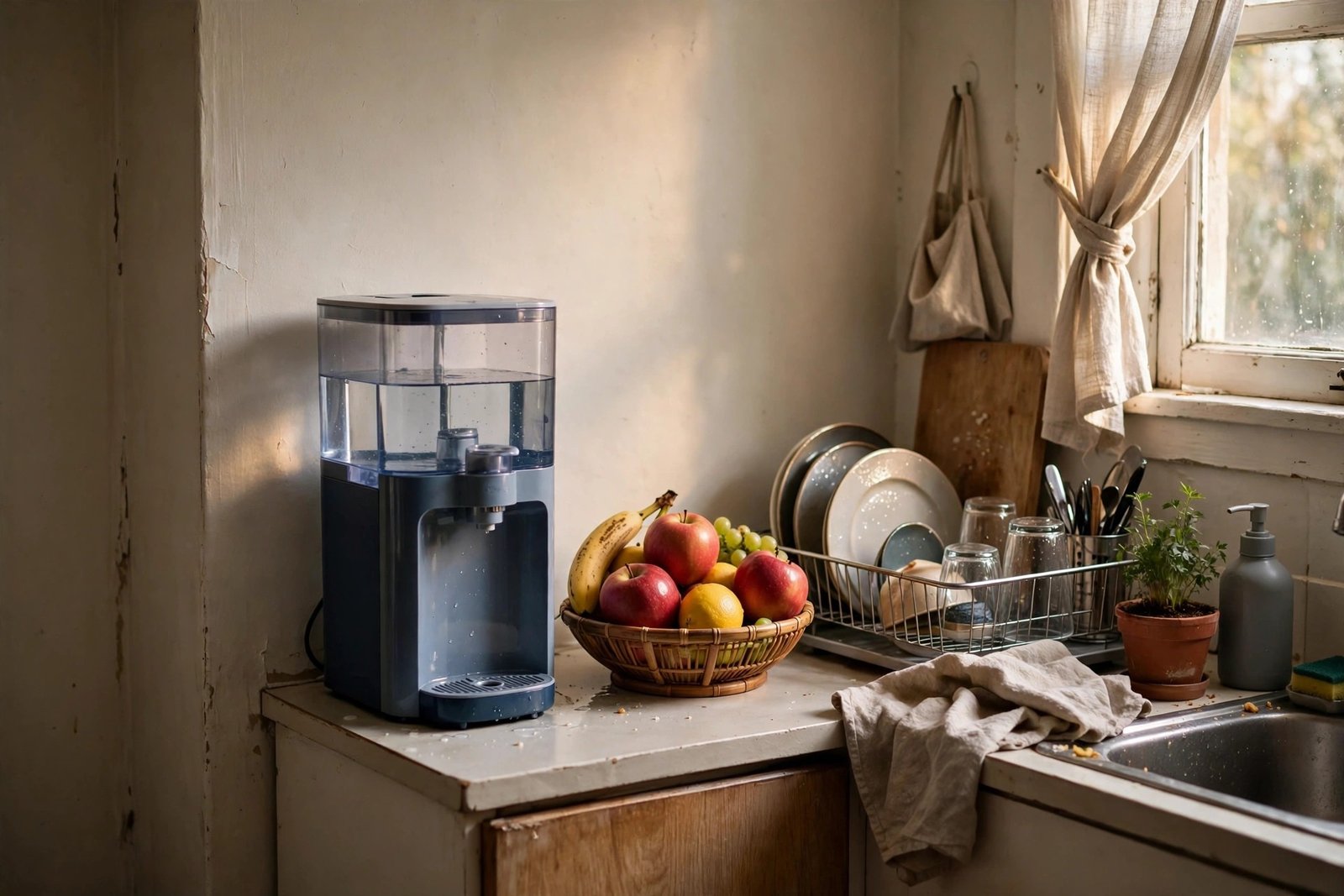
No plumbing. No landlord permission. No drilling under the sink. That’s the whole promise of a countertop reverse osmosis system — and it’s why renters, dorm dwellers, and RV owners keep searching for them.
But once you start comparing, two names swallow every search result: AquaTru Classic and the SimPure Y7P-BW. Both sit on your counter, both promise RO-grade water, and both claim to tackle everything from lead to PFAS. So which one actually earns your money?
I went through the Amazon listings, certification records, and spec sheets for both — plus a third option, the Waterdrop K19-S — to give you the straight answer. No fake “we tested it for 90 days” claims.
Quick Verdict: Which Countertop RO Should You Buy?
Get the AquaTru Classic if certification matters most to you. It’s IAPMO-certified to NSF/ANSI 42, 53, 58, and 401 — including PFOA/PFOS (the “forever chemicals”). That’s third-party proof, not marketing copy. You pay more up front (roughly $428–$475 at recent listings) and more per year in filters, but you get independently verified purity.
Get the SimPure Y7P-BW if you want the smartest value. It costs less to buy (~$250–$370 at recent listings), wastes less water (4:1 pure-to-drain vs AquaTru’s ~3:1), adds a UV stage, and its official filter replacements run about $100/year. The catch: its “NSF” claims are lab-tested, not independently certified.
Consider the Waterdrop K19-S if you want the most compact option at a mid-range price (~$349 at recent listings). Fewer of its claims are independently verified, so it stays a third-place pick.
Decision Matrix
| What matters most | AquaTru Classic | SimPure Y7P-BW | Waterdrop K19-S |
|---|---|---|---|
| Independent certification | ✓ IAPMO: NSF/ANSI 42, 53, 58, 401 | SGS lab-tested to NSF/ANSI 58 only | Not established |
| Pure-to-drain efficiency | ~3:1 (manufacturer) | ✓ 4:1 (stated) | 3:1 (stated) |
| Upfront price (recent listings) | ~$428–$475 | ✓ ~$250–$370 | ~$349 |
| Annual filter cost (approx.) | ~$70–$115 | ✓ ~$100 | Not verified |
| Footprint | 14 × 12 × 14 in | ~17 × 7.5 × 16 in | ✓ Smallest |
| Best for | PFAS-worried households, certification sticklers | Budget buyers, renters, eco-conscious | Small counters |
Price bands observed in October 2026 listing snapshots — always check the live listing before you buy.
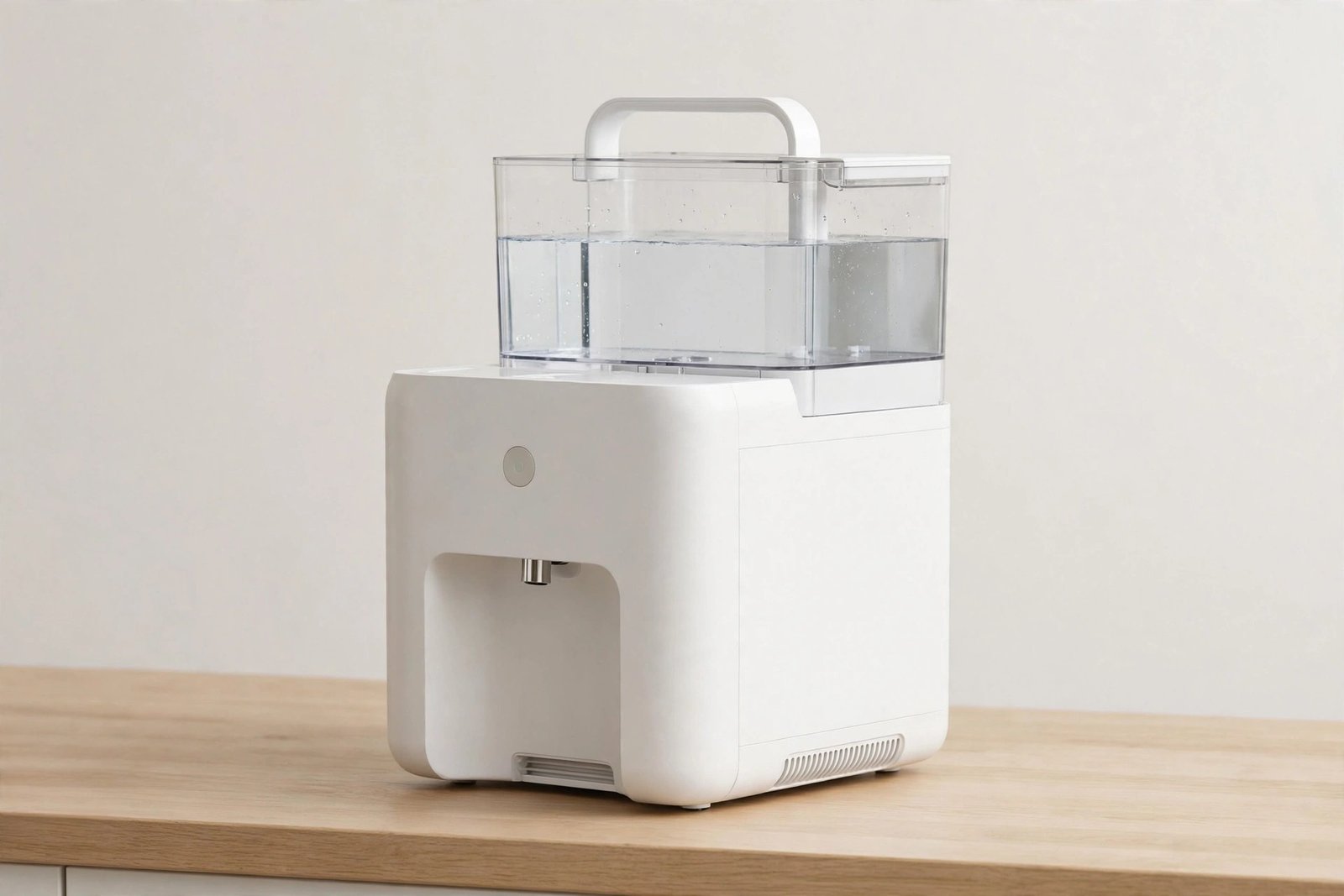
Full Spec Comparison: AquaTru Classic vs SimPure Y7P-BW vs Waterdrop K19-S
| Specification | AquaTru Classic | SimPure Y7P-BW | Waterdrop K19-S |
|---|---|---|---|
| Type | Countertop RO, no plumbing | Countertop RO, no installation | Countertop RO, no installation |
| Filtration stages | 4-stage (pre-filter, RO membrane, activated carbon, VOC filter) | 5-stage RO + UV sterilization | 4-stage |
| Tank capacity | 1-gal tap-water tank → 0.75-gal clean tank | 1.3-gal feed tank | 170 oz (~1.3 gal) |
| Pure-to-drain ratio | ~3:1 (manufacturer; ~75% recovery) | 4:1 (stated) | 3:1 (stated) |
| Flow / dispense rate | ~1 gallon per 10–15 min | 418 GPD / 0.29 GPM max | Not verified |
| Certification | IAPMO certified NSF/ANSI 42, 53, 58, 401 (+ P473) | SGS lab-tested to NSF/ANSI 58 (not NSF certified) | Not established for K19-S |
| Contaminant claims | 83+ contaminants incl. lead, PFOA/PFOS, fluoride, microplastics (certified) | 99.99% of 1,000+ contaminants incl. PFAS, lead, arsenic (manufacturer claim) | PFAS reduction (manufacturer claim) |
| Filter life | 6 months–2 years by stage | 6-month cycle; 528 gal per filter set | Not verified |
| Dimensions | 14 × 12 × 14 in; ~22 lb | ~17.3 × 7.5 × 16.1 in (Amazon) | Most compact of the three |
| Water temperature | Room temp | Room temp only | Not verified |
| Amazon rating (snapshot) | 4.3–4.6 stars, 130–1,000+ ratings (varies by variant) | 4.2–4.3 stars, ~3,200–3,650 reviews | Not observed |
| Price band (recent listings) | ~$428–$475 | ~$250–$370 | ~$349 |
Every number above comes from Amazon listings or manufacturer spec pages, checked October 2026. Where a spec says “not verified,” I couldn’t confirm it from a reliable source — not that it’s false.
AquaTru Classic: The Certified Purifier
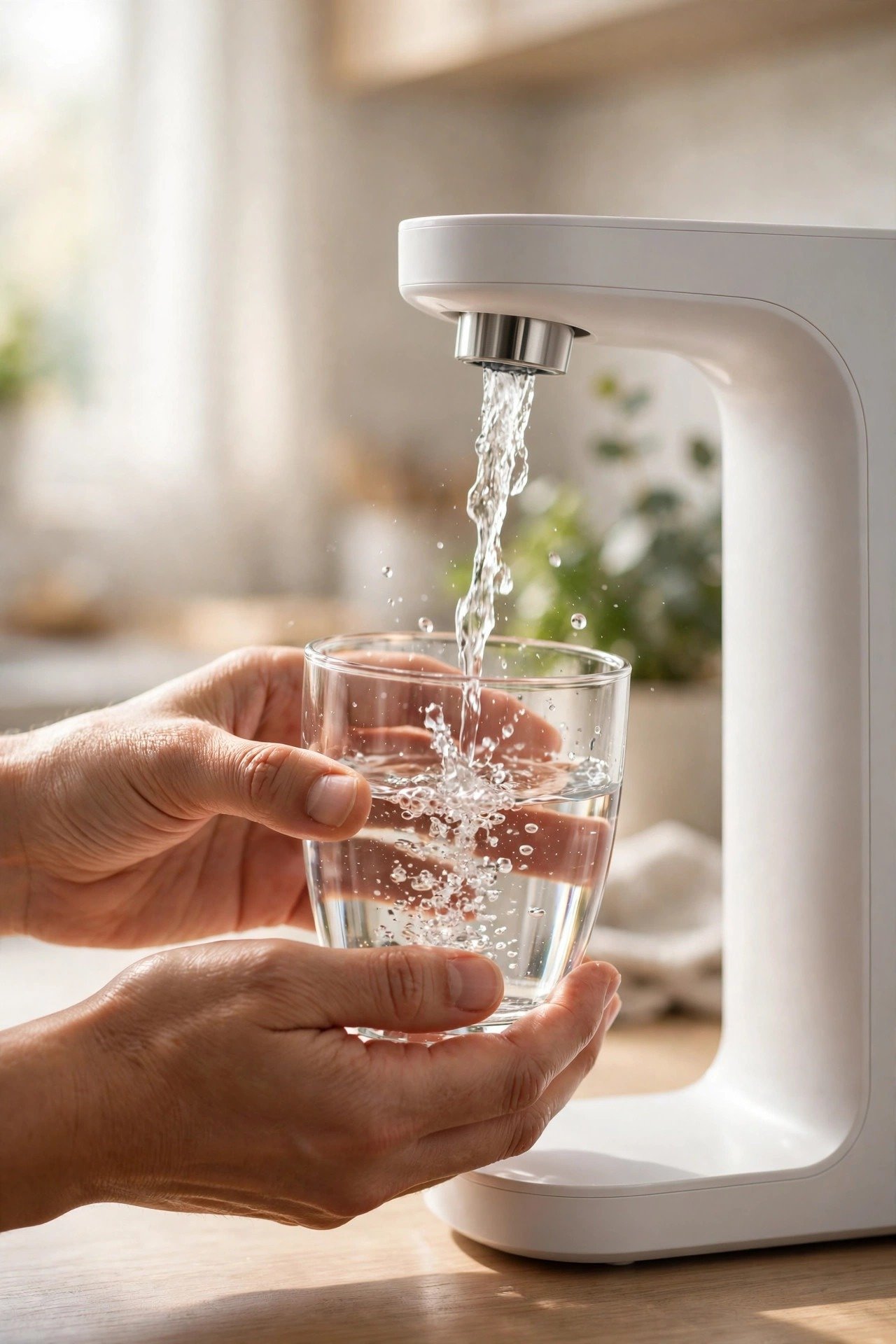
The AquaTru Classic is the name everyone knows in countertop RO, and it earned that reputation the hard way: certifications. It’s the only unit here with full IAPMO certification to NSF/ANSI 42, 53, 58, and 401 — an independent lab verified it reduces 83+ contaminants, including lead, fluoride, microplastics, and PFOA/PFOS. If “forever chemicals” are your worry, this is the one with third-party proof — we cover it in our RO systems and PFAS guide.
Pros:
- IAPMO-certified to NSF/ANSI 42, 53, 58, 401 — the strongest certification package here
- Certified PFOA/PFOS reduction (not just a marketing claim)
- 4-stage filtration with a dedicated VOC polishing filter for taste
- Long filter life on the RO membrane (up to 2 years), so year-2+ maintenance is light
- Strong brand recognition — replacement filters will be available for years
Cons:
- Highest upfront price (~$428–$475 at recent listings)
- ~3:1 efficiency means more wasted water than the SimPure
- Dispense speed is slow — a full gallon takes 10–15 minutes
- Annual filter costs run higher than SimPure’s (see the cost box below)
- Biggest footprint of the three at 14 × 12 × 14 inches
Worth knowing: the Classic’s tank-in-tank design is clever but bulky — on a small apartment counter it eats real estate. And the 1-gallon-per-10–15-minutes fill speed sounds fine until you drink a lot of water; refill planning becomes part of your routine.
AquaTru Classic — Amazon listing (check the live price; variant listings may show different ratings and prices)
SimPure Y7P-BW: The Value Champion
The SimPure Y7P-BW is the internet’s favorite countertop RO for one reason: it gives you most of what the AquaTru does at roughly half the price. It’s the best-selling unit of this bunch — ~3,200–3,650 reviews and a #32 rank in its Amazon category at last check.
Now the honesty part. SimPure’s Amazon listing says “TESTED AND CERTIFIED BY SGS: Against NSF/ANSI 58.” That wording is easy to misread — SGS lab testing is not the same as IAPMO certification to NSF standards. SimPure is not NSF certified; it was lab-tested against one standard (58). Better than nothing, but not the AquaTru’s certification package. Know the difference before you buy.
Pros:
- Best pure-to-drain ratio here: 4:1 (stated) — wastes the least water
- UV sterilization stage for extra microbiological peace of mind
- Lowest upfront price (~$250–$370 at recent listings)
- Cheapest official filters: 12-month kit at $99.99 direct from SimPure
- Tool-free 3-second filter swaps — genuinely easy maintenance
- Slim profile (~7.5 in wide) fits narrow counters
Cons:
- No NSF certification — SGS lab-tested to NSF/ANSI 58 only
- “99.99% of 1,000+ contaminants” is a manufacturer claim, not certified
- Room-temperature water only — no hot or cold dispense
- 1.3-gallon feed tank means frequent refills for families
- Does not add minerals back (no remineralization on this variant)
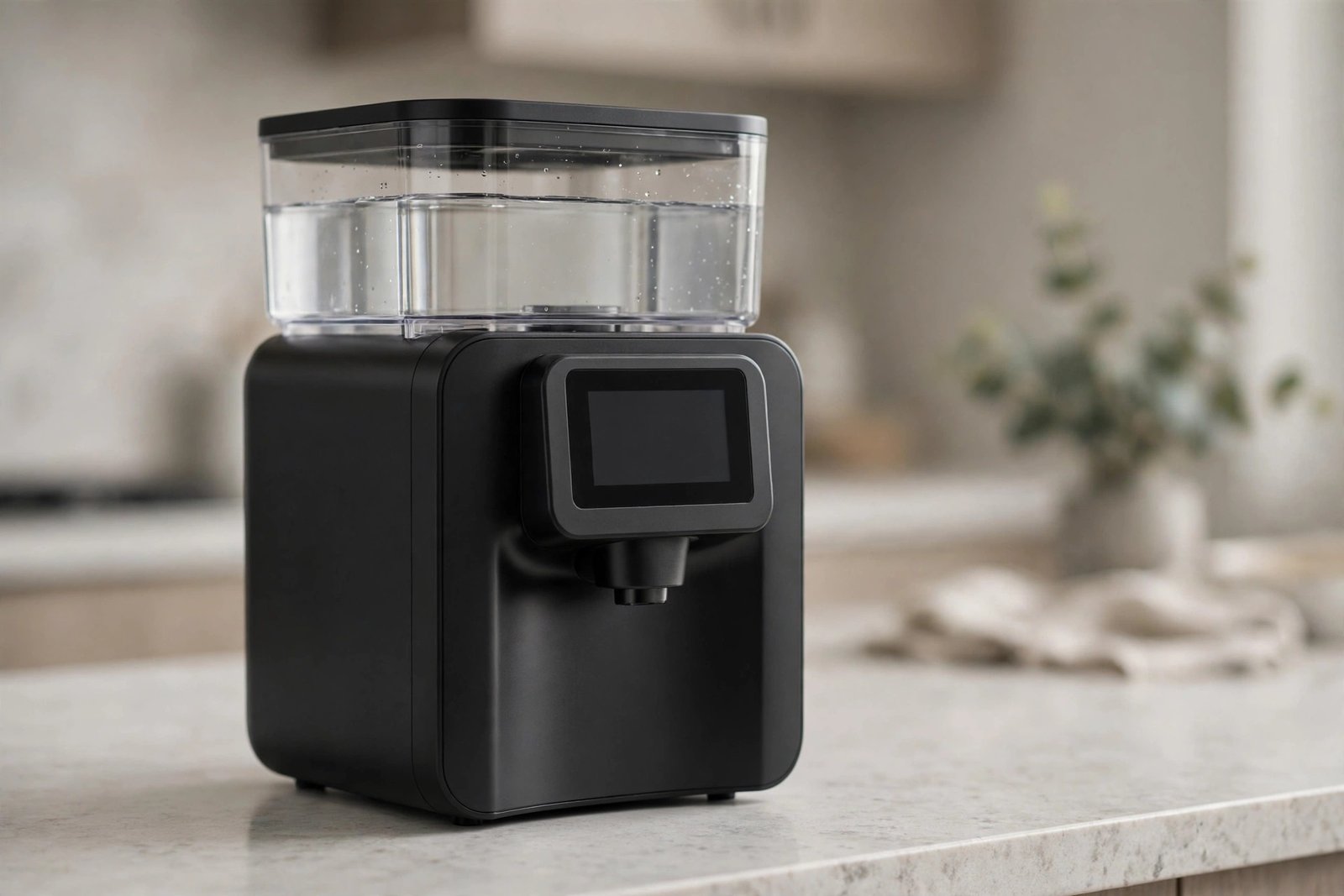
Worth knowing: the digital display and UV stage make the Y7P-BW feel far more expensive than it is. The biggest adjustment is room-temperature-only water — if you’re used to a cold-water cooler, that takes getting used to.
SimPure Y7P-BW — Amazon listing (check the live price)
Waterdrop K19-S: The Compact Third Option
Waterdrop is behind some of the best-selling tankless under-sink systems (see our best tankless RO roundup), so the K19-S deserves a mention: a 4-stage countertop RO with a 170 oz tank, 3:1 ratio, and a PFAS-reduction claim — around $349 at recent listings.
Pros:
- Most compact of the three — easiest fit for cramped counters
- Mid-range price (~$349 at recent listings)
- Waterdrop’s strong brand and filter availability ecosystem
Cons:
- No established certifications for the K19-S itself (a sibling variant carries an IAPMO NSF/58 listing for TDS only — not the same thing)
- No observed Amazon review count at research time — thinner track record
- 3:1 efficiency is merely average here
- Filter replacement costs not verified
Worth knowing: the K19-S is the “just tell me which one is simple” pick — but with fewer verified claims than either rival, it’s a compact alternative, not a head-to-head winner.
Waterdrop K19-S — Amazon listing (check the live price)
Filter Cost-Per-Year: The Number Nobody Shows You
Filter cost-per-year box (October 2026 snapshot — check live listings; prices move)
- AquaTru Classic: ~$70–$115/year. Amazon’s one-year combo pack was $68–$80 at last check (2 pre/carbon + 1 VOC filter). Year 2 runs higher because the RO cartridge ($80+) joins the rotation. Long RO life (up to 2 years) softens the blow over time.
- SimPure Y7P-BW: ~$100/year. SimPure’s official 12-month kit is $99.99 (2 CF + 2 RO filters). Individual CF filter: $22.99.
- Waterdrop K19-S: not verified — I couldn’t confirm replacement pricing from a reliable source, so I’m not guessing. Check the Amazon listing before buying.
The honest math: the SimPure’s ~$100/yr filter costs don’t erase AquaTru’s upfront premium — because AquaTru’s year-1 filter costs can run under $80 and its RO membrane lasts up to 2 years. The real cost gap is the purchase price.
Who Should NOT Buy a Countertop RO System
This is the section most comparison sites skip, because they want you to buy. Here’s the truth:
- If you own your home and can drill a hole, an under-sink RO gives you unlimited water, better efficiency, and lower cost per gallon. Countertop units are a renter’s compromise, not an upgrade. Our iSpring vs APEC comparison covers the best ones.
- If you need hot or cold water on demand, none of these three will satisfy you — they’re room-temperature dispensers. Pair one with a kettle and a fridge jug, or look at pricier hot/cold models.
- If your tap water is extremely hard or well water, get a lab test first. These units are designed for municipal tap water; heavy sediment or iron can kill filters fast.
- If you expect “alkaline/mineral” water, standard RO strips minerals. Neither the AquaTru Classic nor the SimPure Y7P-BW adds them back. AquaTru sells an alkaline variant separately; the SimPure Y7T line has an alkaline filter option. Don’t buy the base model expecting minerals.
Frequently Asked Questions
Is AquaTru worth the money?
If certification is what you’re paying for, yes — it’s the only countertop RO in this class with full IAPMO certification to NSF/ANSI 42, 53, 58, and 401. You’re paying a premium (~$428–$475 at recent listings) for independently verified reduction of contaminants including PFOA/PFOS. If that proof doesn’t matter to you, the SimPure Y7P-BW delivers similar everyday performance for a lot less.
AquaTru vs SimPure — which countertop RO is better?
AquaTru Classic is better on certified purity. SimPure Y7P-BW is better on price, water efficiency (4:1 vs ~3:1), and filter costs, plus it adds a UV stage. For most renters on a budget, the SimPure is the smarter buy. For anyone specifically worried about PFAS, the AquaTru’s certifications make it the safer pick.
Does AquaTru remove PFAS (forever chemicals)?
Yes — the AquaTru Classic is IAPMO-certified to NSF/ANSI standards that include PFOA/PFOS reduction. That’s certified, not just claimed. SimPure’s Y7P-BW also claims PFAS reduction, but that claim is manufacturer-stated and SGS lab-tested, not independently certified. See our RO and PFAS guide for details.
How much water does a countertop RO waste?
More than under-sink systems. At ~3:1 (AquaTru) about 3 cups go back to the tank for every clean cup; the SimPure’s 4:1 ratio cuts that to about 2.5. The practical upside: waste water just collects in the feed tank — it doesn’t run down a drain line like a plumbed system.
Do countertop reverse osmosis systems need installation?
No — that’s the entire point. Fill the tank, plug it in, run the initial flush cycles (usually 3–5 per the manual). No drilling, no landlord permission. When you move, you unplug it and take it with you — which is why they’re the default pick for renters, dorms, and RVs.
Does the SimPure Y7 add minerals back?
The Y7P-BW does not — RO water is demineralized by design. If you want minerals, look at SimPure’s Y7T series (alkaline filter option) or AquaTru’s Classic Alkaline variant. Don’t buy the base model expecting alkaline water.
Is the SimPure Y7P NSF certified?
No. “Tested and certified by SGS against NSF/ANSI 58” is lab testing — not NSF certification. No independent body (IAPMO, WQA) has certified the Y7P-BW to an NSF/ANSI standard as far as I could verify.
What is the best countertop reverse osmosis system for renters?
For most renters: the SimPure Y7P-BW — no installation, slim footprint, low upfront and ongoing costs, and it moves with you. For renters in areas with known PFAS or lead issues: the AquaTru Classic — the certification paperwork is worth the premium when your water quality is genuinely questionable.
The Bottom Line
Countertop RO exists for one reason: people who can’t touch their plumbing still deserve RO water. The choice here is clean-cut — buy the AquaTru Classic for the strongest proof of what’s in your water, the SimPure Y7P-BW for the best value, the least waste, and the cheapest filters. If your counter is genuinely tiny, the Waterdrop K19-S is a reasonable third option — just know its claims are the least verified of the three.