
As an Amazon Associate I earn from qualifying purchases.
Here’s a strange thing: the iSpring RO500 is one of the most-searched tankless RO systems of 2026, and yet nobody has written a proper review of it. Search the exact phrase and you get marketplace aggregators, a three-year-old review of a replacement cartridge, and one thin comparison page that gets a basic fact wrong — it claims the RO500 has no testing or certifications, when the system is actually NSF/ANSI 58 certified.
So let’s fix that: full verified specs, the BN vs AK-BN breakdown, honest filter-cost math, real drawbacks owners complain about, and a straight answer on whether it’s worth your money in 2026.
⚡ The short answer
The iSpring RO500 is worth it if you want a certified, no-tank RO system around the $500–$625 mark with genuinely low running costs. Its NSF/ANSI 58 certification, 2:1 pure-to-drain ratio, and ~$82/year owner-reported filter cost make it one of the sanest buys in the tankless category. It’s not worth it if your feed water is very high in TDS (over 750 PPM), you have no power outlet under the sink, or you want alkaline water without buying the AK variant. Details below.
iSpring RO500: full specs (verified)
| Spec | iSpring RO500-BN |
|---|---|
| Daily output | 500 GPD (0.4 GPM) |
| Pure-to-drain ratio | 2:1 |
| Certification | NSF/ANSI 58 certified (TDS reduction) |
| Design | Tankless under-sink; twist-and-lock filter cartridges |
| Faucet | Brushed-nickel smart faucet with TDS monitor |
| Dimensions / weight | 17.5"L × 5.2"W × 16.25"H; 21 lbs |
| Max feed TDS | 750 PPM |
| Warranty & support | 30-day money-back; 1-year limited warranty (extendable on registration); lifetime US-based support (Atlanta, GA) |
| Typical price band | ~$500–$625 |
What the RO500 actually is (and who it’s for)
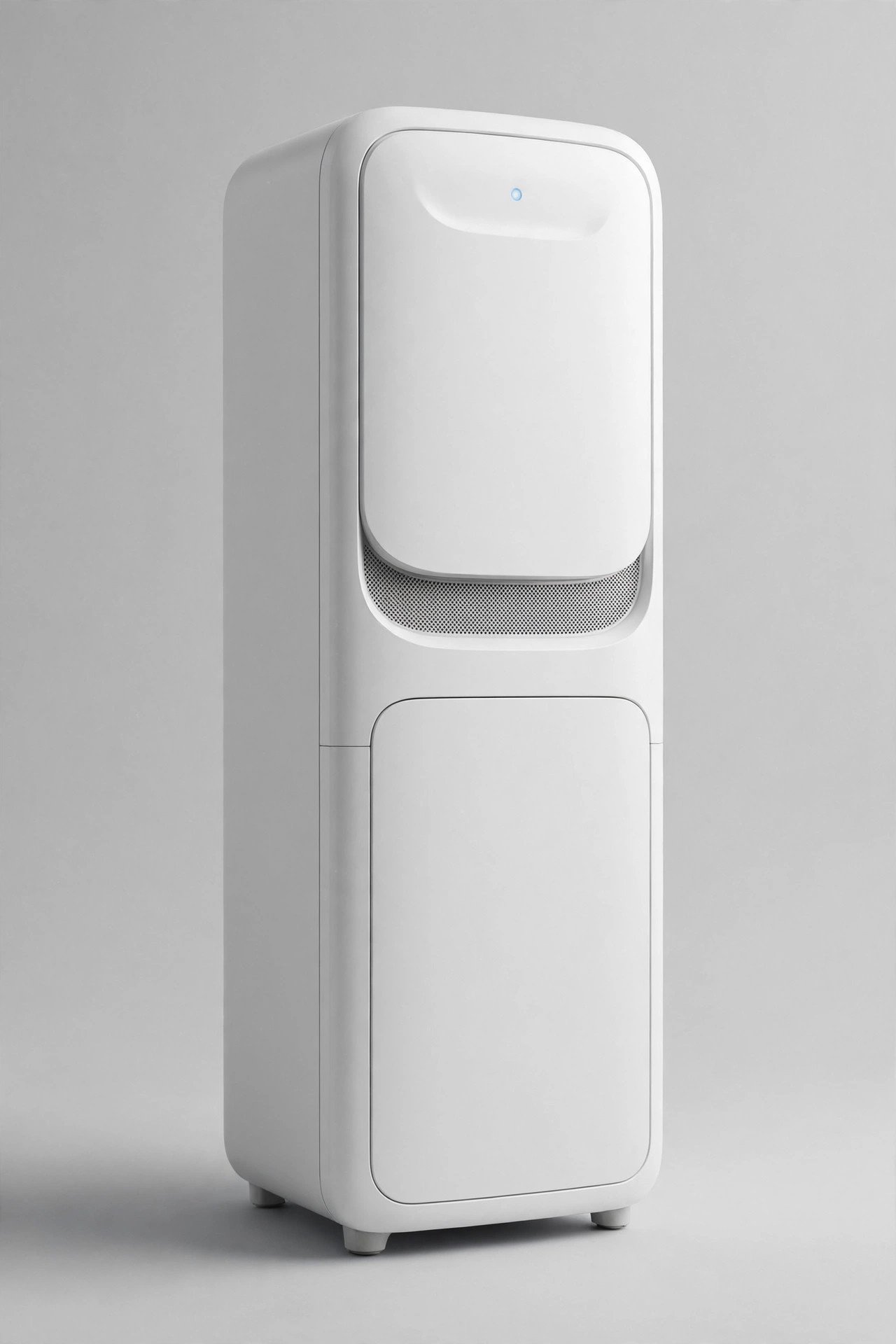
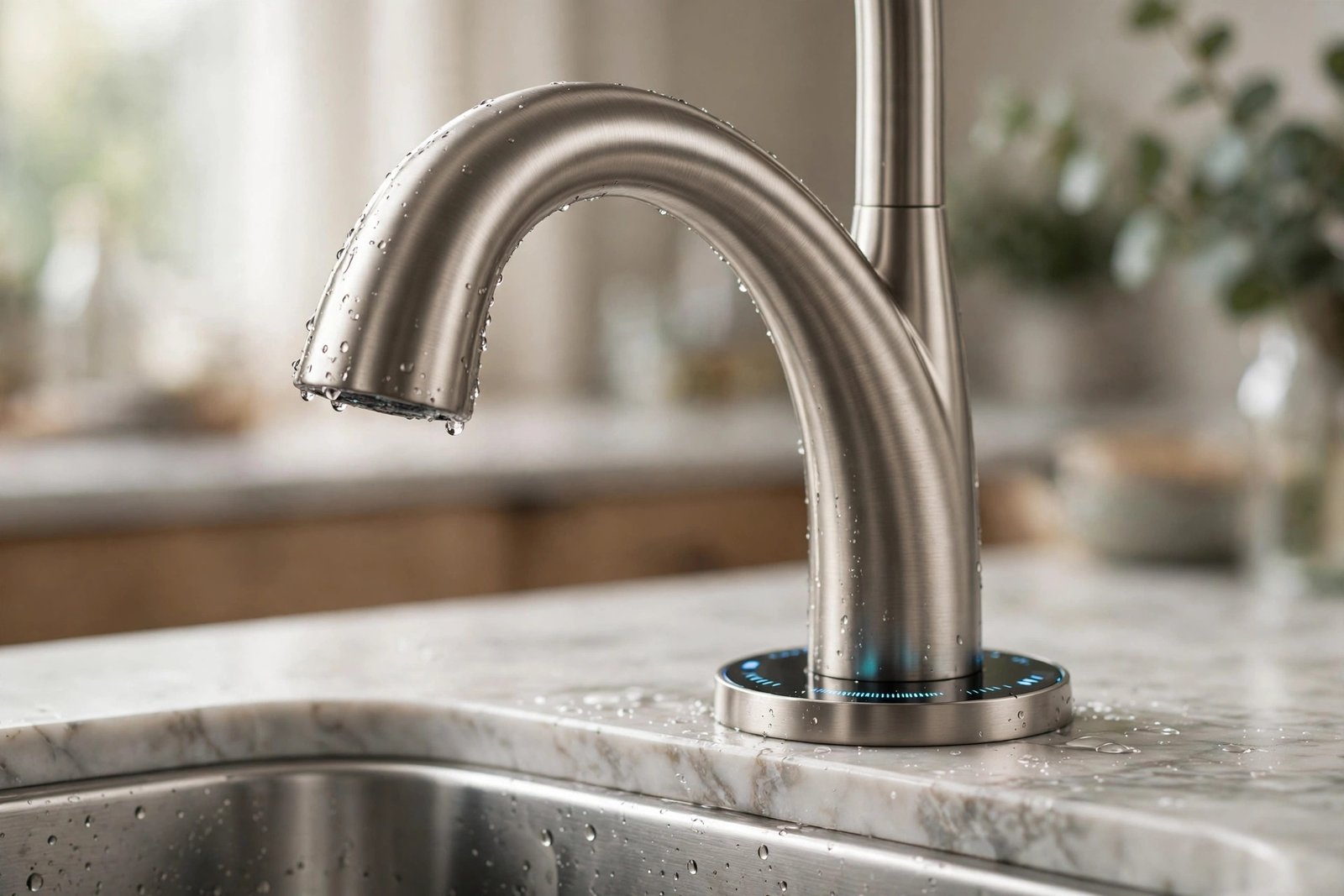
The RO500 is iSpring’s tankless answer: a compact under-sink unit pushing 500 gallons per day (~0.4 GPM) with no storage tank hogging your cabinet. Water passes multi-stage filtration including the RO membrane, exiting through a brushed-nickel smart faucet with a live TDS readout.
Two things define it. First, the 2:1 pure-to-drain ratio — solidly efficient for this price class, where many rivals sit at 1.5:1 or worse. Second, NSF/ANSI 58 certification: an independent body verified its TDS-reduction performance. In a category full of vague "tested to standards" language, a real certification is worth real money.
The twist-and-lock cartridges deserve a mention: filter changes that used to need shutoffs, wrenches, and a plumber now take seconds by hand. If you’ve ever delayed a filter change because it looked miserable, this detail matters more than any spec number.
The trust angle: yes, it’s actually certified
I want to dwell on this because misinformation is floating around. At least one comparison site currently claims the iSpring RO500 is "not backed with any testing or certifications." That’s false. The RO500-BN is NSF/ANSI 58 certified for TDS reduction, per iSpring’s own product page, Amazon listing data, and retailer records. The AK-BN variant carries complete-system NSF/ANSI 58 certification as well.
When a company pays for independent certification, its claims sit where a lab can check them. Uncertified rivals might filter just as well — but you’re taking their word for it. Comparing against classic tank systems? Our iSpring vs APEC guide lays out each brand’s strengths.
RO500-BN vs RO500AK-BN: which variant do you need?
iSpring sells two main versions, and buyers mix them up constantly. Here’s the difference in plain terms:
- RO500-BN — the standard model. 500 GPD, 2:1 drain ratio, NSF 58 certified, brushed-nickel faucet. Clean, mineral-stripped RO water.
- RO500AK-BN — everything above, plus a built-in carbon-alkaline remineralization stage that adds minerals back and balances pH. Same 500 GPD and 2:1 ratio; complete-system NSF/ANSI 58 certification; 24-month membrane service interval; rated for 15–70 psi feed pressure with an auto-flush routine.
Which should you buy? If you’ve tasted straight RO water and found it flat or "empty," get the AK-BN — the remineralization stage fixes exactly that complaint. One honest caveat from the spec data: the alkaline stage keeps output TDS above near-zero, so if you’re chasing the lowest possible TDS number (some aquarium or lab-ish use cases), the standard BN is the purer pick. For drinking water, most people prefer the AK’s taste.
There’s also a UV variant (RO500AK-BN+UVF8) floating around on Amazon if disinfection matters to you — worth knowing about, though it’s beyond this review’s scope.
Installation and daily use: what to expect
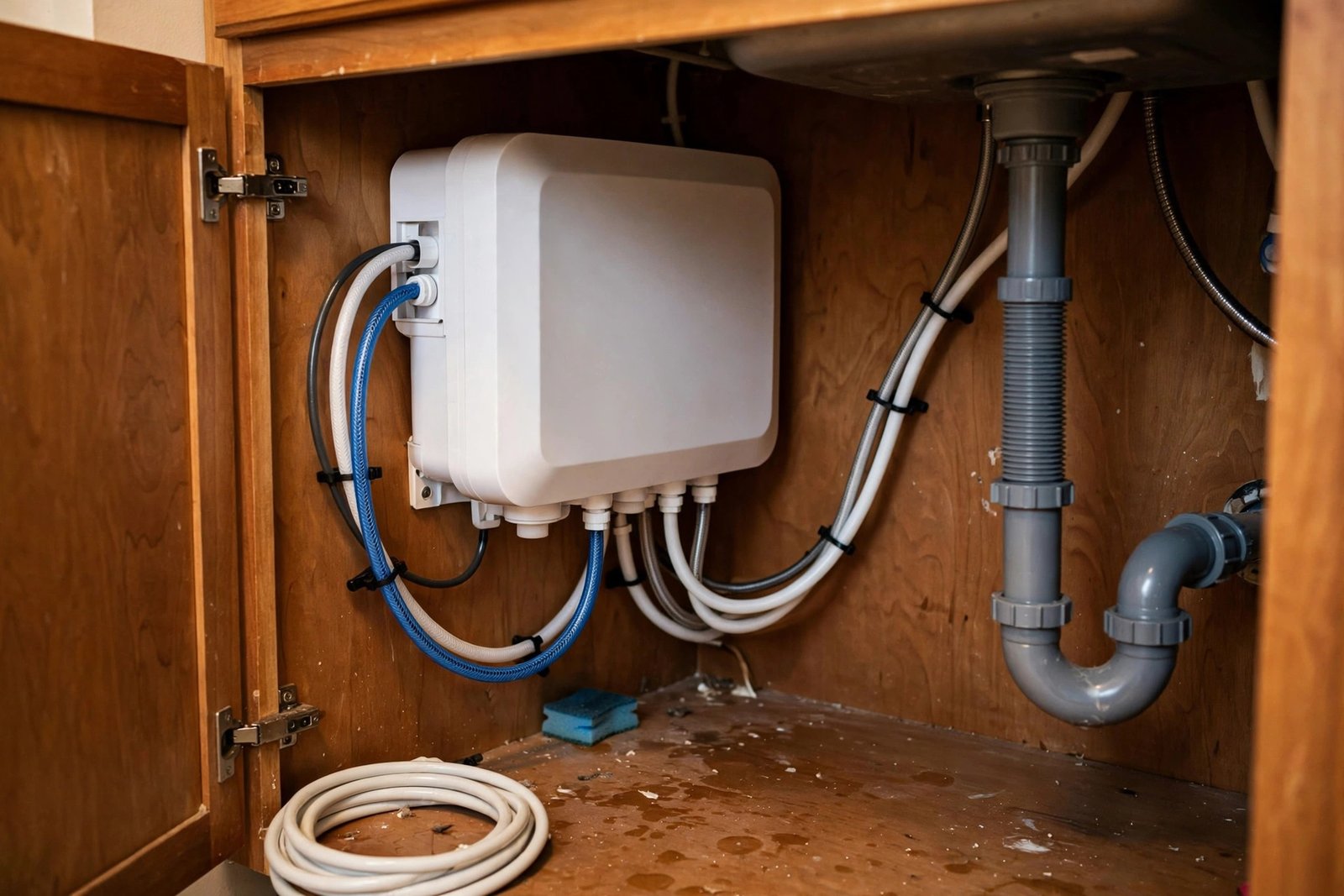
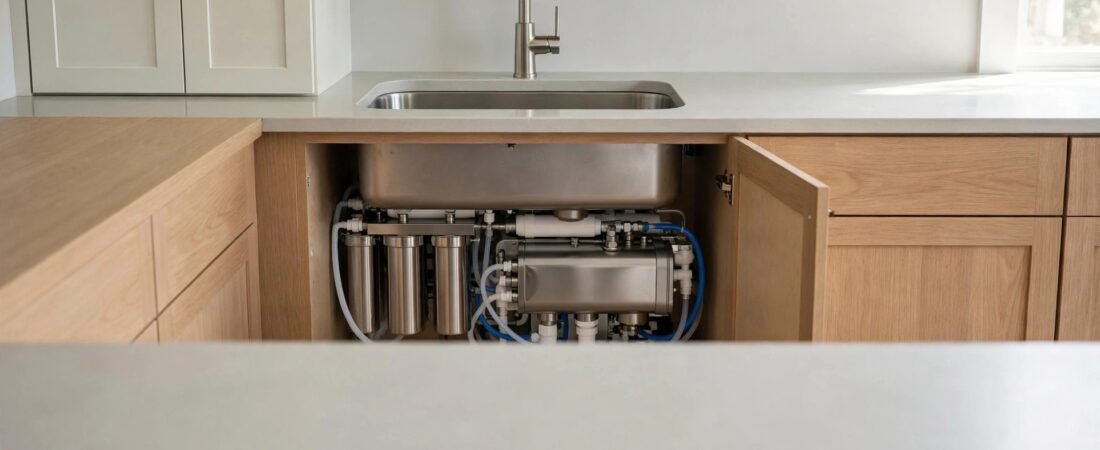
Installation is standard under-sink fare: mount the unit, tap the cold-water line, connect the drain, drill or reuse a faucet hole. Budget an afternoon if you’re handy, a plumber’s hour if not. One non-negotiable: you need a power outlet under the sink for the booster pump and smart faucet. Check before you order, not after.
Daily use is where tankless shines: 0.4 GPM fills a glass in seconds and keeps up with cooking, and the TDS readout becomes oddly addictive. No tank means no sanitizing, no stale-water taste after vacations, and your cabinet space stays yours — at 17.5 × 5.2 × 16.25 inches and 21 lbs, it tucks against the wall and disappears.
Filter replacements: the real yearly cost
💰 Filter cost-per-year: the honest math
Owners report paying around $165 for a 2-year filter set on Amazon (owner-reported figure from buyer Q&A, not official iSpring pricing — actual prices move around). That works out to roughly $82.50/year in replacement filters.
The AK-BN variant stretches the RO membrane to a 24-month service interval, and the system runs an auto-flush routine that helps the membrane last. Twist-and-lock cartridges mean you do the swap yourself in minutes — no service call.
Bottom line: ~$80–$100/year is among the lowest running costs in the tankless category. This is quietly one of the RO500’s best features — cheap to own, not just cheap to buy.
That running-cost figure is a big deal in context. Plenty of tankless systems cost $150–$200+ a year in proprietary cartridges. The RO500’s sub-$100/year ownership cost means the total 5-year cost of ownership stays competitive even against cheaper upfront systems. When a membrane starts aging, these warning signs tell you it’s time — and our iSpring filter guide covers schedules across their lineup.
Pros and cons — no sugarcoating
What I like
- Real NSF/ANSI 58 certification — verified performance, not just marketing.
- 2:1 drain ratio — efficient for the category; less water down the drain than most rivals.
- Low running costs — ~$82/year in filters (owner-reported) is excellent.
- Twist-and-lock cartridges — filter changes take minutes, no tools, no plumber.
- US-based lifetime support — iSpring’s Atlanta team actually picks up the phone, per owner reports.
- Compact footprint — 21 lbs, slim profile, cabinet space preserved.
What I don’t like
- Needs electricity. No under-sink outlet = no installation. Non-negotiable.
- ~$500–$625 upfront is real money — budget tank systems cost half, though they cost more in hassle.
- Some owners report leak issues in user reviews — mostly fitting/seal related, and iSpring support generally resolves them, but it’s the most common complaint pattern. Take installation care seriously and check connections in the first week.
- Brushed-nickel faucet shows fingerprints. Cosmetic, but you’ll wipe it more than you’d expect.
- 750 PPM max feed TDS. Fine for city water; not the pick for extreme well water without pre-treatment (see our well water RO guide).
Who should NOT buy the iSpring RO500
- Feed TDS above 750 PPM. That’s the system’s rated max — beyond it, you’re outside the design envelope. Get your water tested first (here’s how).
- Renters who can’t drill. It needs a dedicated faucet. A countertop RO is the renter-friendly move.
- You want the absolute cheapest upfront cost. A classic tank system like the iSpring RCC7 costs far less initially — compare in our RCC7AK vs APEC ROES-PH75 guide if tank systems are on your radar.
- You need certified microbial purification. The RO500’s NSF 58 certification covers TDS reduction — it’s not certified as a microbiological purifier. If bacteria is a concern, you need disinfection (consider the UV variant) — an RO membrane alone isn’t the answer.
Frequently asked questions
How often do you change the filter on an iSpring RO500?
It depends on the stage: pre-filters on the shorter cycle, the RO membrane up to 24 months on the AK-BN variant (which also runs an auto-flush routine to extend membrane life). The smart faucet tracks filter life and tells you when each stage is due — follow it rather than the calendar, since your water quality and usage move the numbers.
How much do the iSpring RO500 replacement filters cost?
Owners report around $165 for a 2-year filter set on Amazon — roughly $82/year. That’s owner-reported, not official iSpring pricing, so verify the current price on the listing before you budget. Either way, it’s among the lowest annual filter costs in the tankless category.
Does the iSpring RO500 remove bacteria from source water?
An RO membrane’s pores physically reject bacteria — but rejection isn’t the same as certified disinfection, and iSpring does not market or certify the RO500 as a microbiological purifier (its NSF 58 certification covers TDS reduction). If your water may contain bacteria, treat disinfection as a separate job: iSpring sells a UV-equipped variant, and a UV stage is the standard fix. Don’t rely on any RO system alone for microbial safety.
Is the iSpring RO500 worth it vs the Waterdrop G3?
They’re in the same arena with different strengths. The RO500’s edges: NSF 58 certification, 2:1 drain ratio, lower annual filter costs, and US-based support. Waterdrop’s G3 line counters with higher capacity options (the G3P800 does 800 GPD vs the RO500’s 500). If you want maximum output, lean Waterdrop — our G3P600 vs G3P800 comparison sorts those out. If you want the best-certified, cheapest-to-run 500 GPD system, the RO500 is hard to beat. The broader best tankless RO roundup puts the whole category side by side.
What’s the difference between the RO500-BN and RO500AK-BN?
Same 500 GPD, same 2:1 drain ratio, same brushed-nickel smart faucet. The AK-BN adds a built-in carbon-alkaline remineralization stage (minerals back, pH balanced) with complete-system NSF/ANSI 58 certification and a 24-month membrane interval. Buy the AK if you dislike flat-tasting RO water; buy the standard BN if you want the lowest possible TDS output.
Are tankless reverse osmosis systems worth it?
For most city-water households: yes. Unlimited on-demand water, no tank maintenance, fresher taste, compact footprint. The trade-offs are upfront cost ($500+), the need for under-sink power, and somewhat lower water efficiency than the best tank systems. The RO500 specifically makes the math easier than most with its low filter costs — the “worth it” question is mostly about whether you value the tankless convenience, and most owners do.
The verdict
The iSpring RO500 is one of the easiest recommendations in the tankless RO category: certified performance, honest efficiency, cheap to run, and backed by a US support team that answers. It’s not the highest-output system you can buy, and it won’t install itself without a power outlet — but at ~$500–$625 with ~$82/year in filters, the total cost of ownership math is genuinely compelling.
Get the RO500-BN if you want pure, low-TDS water at the lowest price. Get the RO500AK-BN if you want that same system with better-tasting remineralized water. Either way, you’re buying one of the few tankless systems whose claims a lab has actually verified — and in 2026, that still sets it apart.
iSpring RO500-BN Tankless RO System
Key specs: 500 GPD (0.4 GPM) · 2:1 pure-to-drain ratio · NSF/ANSI 58 certified · twist-and-lock cartridges · brushed-nickel smart faucet with TDS monitor · ~$500–$625
iSpring RO500AK-BN — with alkaline remineralization
Key specs: everything in the RO500-BN · plus built-in carbon-alkaline remineralization (pH balanced, minerals restored) · complete-system NSF/ANSI 58 certified · 24-month membrane interval · 15–70 psi feed pressure with auto-flush
Check Price on Amazon →Still comparing across the category? Our best tankless RO systems guide and RO vs water softener explainer will finish the job.